
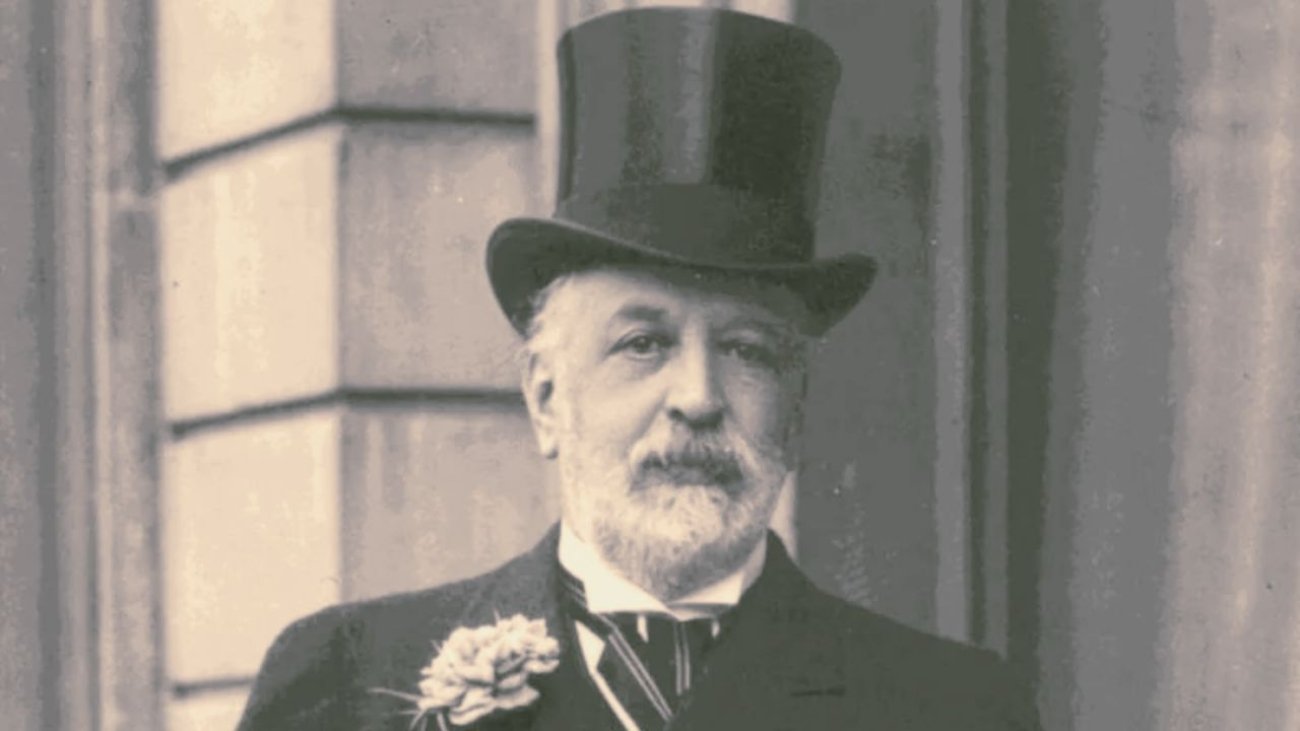
The Rothschild name carries enormous weight in European financial history. Most people associate it with powerful banks, grand estates, and international influence. But the earliest figure in that family story was not a banking magnate. He was a modest merchant working in a restricted Jewish quarter in eighteenth-century Frankfurt.
His name was Amschel Moses Rothschild. He traded silk cloth and exchanged currency. He raised a family under significant legal and social constraints. And he died young, leaving behind a son who would go on to build one of the most recognized financial dynasties in history.
This article looks at who Amschel Moses Rothschild actually was — his life, his family, his death, and why his story matters beyond genealogy.
Who Was Amschel Moses Rothschild?
Amschel Moses Rothschild was a German Jewish merchant and currency trader. He was born around 1710 and died on 6 October 1755 in Frankfurt. His name appears in different spellings across historical records — Amschel, Anschel, and Moses Amschel are all variations you may encounter.
He is important primarily because of who his son became. His son, Mayer Amschel Rothschild, went on to found the Rothschild banking house. That distinction matters. Amschel Moses and Mayer Amschel are two different people, one generation apart. They share similar name elements, which causes confusion, but they are not the same person.
To be direct: Amschel Moses Rothschild was the father. Mayer Amschel Rothschild was the son who built the banking dynasty. Amschel Moses himself was a local trader — not an international financier. The famous Rothschild banking empire came in the generation after him.
His own father was Moses Kalman Rothschild, which means Amschel Moses sat in the middle of a three-generation chain: Moses Kalman → Amschel Moses → Mayer Amschel.
Life in Frankfurt’s Judengasse
Amschel Moses lived and worked in the Judengasse — Frankfurt’s designated Jewish quarter. The name translates roughly to “Jews’ Lane.” Jewish residents in this period were legally required to live within its boundaries. They also faced restrictions on what occupations they could hold and where they could travel freely.
That said, the Judengasse was not simply a place of hardship. It was also a functioning commercial and communal center. Families built lives there. Businesses operated. Communities maintained religious and cultural traditions across generations.
Amschel Moses worked within this environment as a trader in silk cloth and as a money changer. These were roles that Jewish merchants in Frankfurt commonly filled during this era. Currency exchange in particular required knowledge, trust, and a reliable reputation — none of which came easily under the restrictions of the time.
A 1749 tax register reportedly valued his assets at 1,375 guilders. This figure appears in secondary historical accounts and should be taken as broadly indicative rather than a precise financial portrait. Still, it suggests a man of modest but real economic standing within his community — not wealthy by the standards of later Rothschild generations, but not without resources either.
Documented information about his personal circumstances remains limited. Historians and archivists note that the paper trail for Amschel Moses is thin compared with the extensive records available for his son and later descendants.
His Marriage and Children
Amschel Moses married a woman named Schönche Lechnich. Some sources spell her surname as Lechenich, so you may see both versions in genealogy records. Together they had eight children, though only five reportedly survived to adulthood — a reality that reflected common childhood mortality rates in eighteenth-century Europe.
One of those surviving children was Mayer Amschel Rothschild, born in 1744. The Rothschild Archive, along with Wikipedia and FamilySearch records, all confirm this parent-child relationship.
Schönche outlived her husband by just one year. She died in 1756, the year after Amschel Moses passed. The two deaths in quick succession left their young children without either parent.
Mayer Amschel was around eleven or twelve years old when his father died and twelve or thirteen when his mother followed. That kind of loss, at that age, shapes a person. It certainly shaped the path Mayer Amschel took in the years that followed.
His Death and Its Effect on Mayer Amschel
Amschel Moses died on 6 October 1755 during a smallpox epidemic that swept through Frankfurt’s Jewish community. His wife died the following year. Their children were left to navigate the world without either parent’s guidance or financial support.
Before these deaths, Mayer Amschel had been sent to study at a yeshiva in Fürth — a city in Bavaria with a significant Jewish community and established religious schools. This was a common path for a boy from a observant Jewish family in that period. Religious education was both a practical and a spiritual priority.
But when both parents died within a year of each other, those studies came to an end. Mayer Amschel returned from Fürth and entered the world of trade and commerce much earlier than he might have otherwise. He reportedly worked as an apprentice with a banking firm in Hanover before eventually returning to Frankfurt.
The foundation his father had built — a reputation in currency exchange, a place within Frankfurt’s Jewish merchant community, a family name known in local commerce — gave Mayer Amschel something to build from. He started small, dealing in coins, antiques, and trade goods. Over time he developed a relationship with the court of the rulers of Hesse-Kassel, which opened doors to a much larger financial world.
Mayer Amschel eventually had ten children of his own, including five sons. Those sons — Amschel, Salomon, Nathan, Carl, and Jakob — established banking operations in Frankfurt, London, Paris, Vienna, and Naples respectively. That five-city network is what people today typically think of when they hear the Rothschild name.
None of that existed in Amschel Moses’s lifetime. But his life set the stage for all of it.
Why Amschel Moses Rothschild Still Matters
Amschel Moses Rothschild did not found a bank. He did not build a financial empire. He lived within the narrow legal and social boundaries placed on Jewish residents of Frankfurt in the eighteenth century, traded where he could, raised a family, and died at a relatively young age during an epidemic.
What makes him worth knowing about is the generational context he provides. He represents the “foundation generation” — the person whose circumstances, community, and work life directly shaped the conditions that Mayer Amschel inherited and eventually transformed.
For anyone researching Rothschild family history, he is the link between ordinary eighteenth-century Frankfurt commerce and one of Europe’s best-known financial families. Genealogy platforms like FamilySearch and institutional sources like the Rothschild Archive can help trace his family connections, though online family-tree entries should always be checked against archival records when precision matters.
If you enjoy reading about the real stories behind famous families — the quieter generations that rarely make headlines — Daily Business Base covers a wide range of profiles and historical business stories worth exploring.
A Brief Summary of the Key Facts
- Full name: Amschel Moses Rothschild (also spelled Anschel or Moses Amschel)
- Born: Around 1710 in Frankfurt
- Died: 6 October 1755, Frankfurt, during a smallpox epidemic
- Occupation: Merchant and currency exchanger in Frankfurt’s Judengasse
- Spouse: Schönche Lechnich (died 1756)
- Children: Eight, with approximately five surviving to adulthood
- Famous son: Mayer Amschel Rothschild (1744–1812), founder of the Rothschild banking house
- Father: Moses Kalman Rothschild
Amschel Moses lived a life largely unrecorded by history. What we know comes from tax registers, genealogical records, and the accounts written later about his more famous son. But that modest life in a restricted Frankfurt lane was where the Rothschild story began — not with grand banking halls or European courts, but with a merchant who traded silk, exchanged coins, and raised a family as best he could.
Read Also: