Leva Mae Stewart

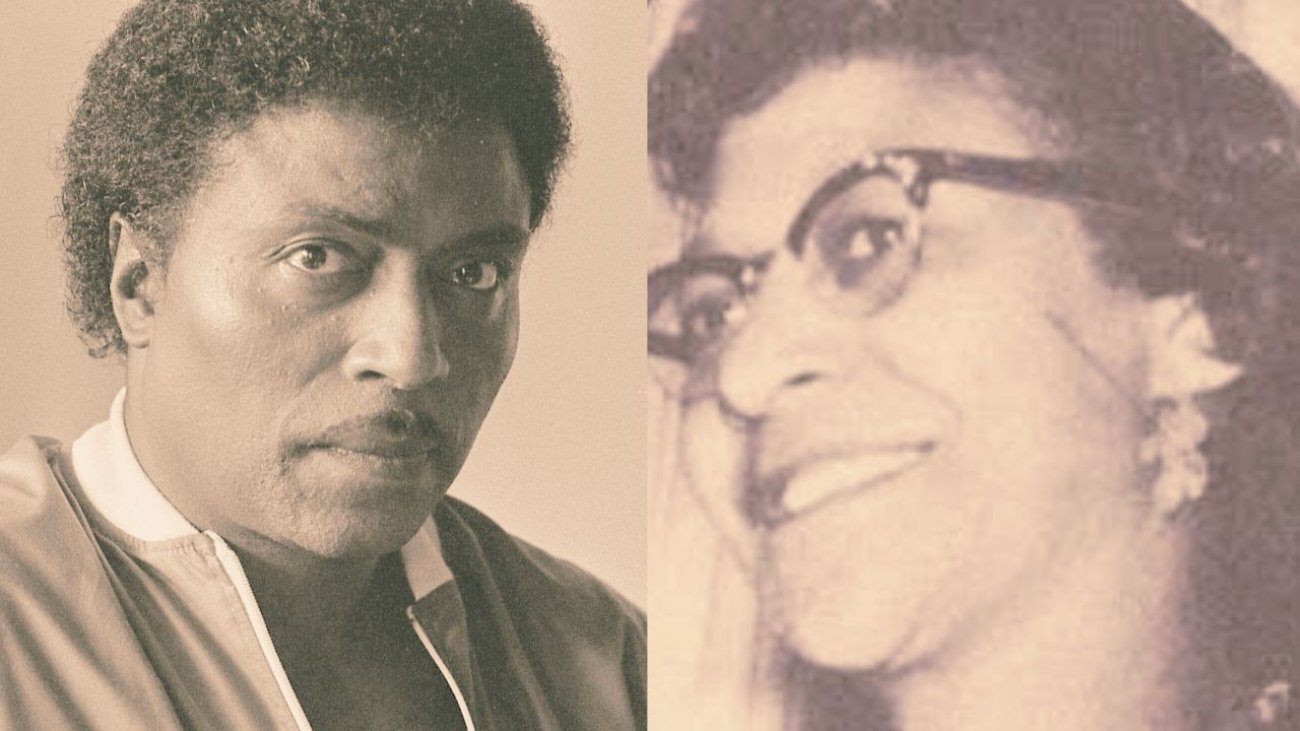
Leva Mae Stewart: Little Richard’s Mother and Her Story

Most people recognize the name Little Richard without hesitation. The music, the voice, the energy — all of it is unforgettable. But far fewer people know the name Leva Mae Stewart, the woman who raised him.

Her story is not one of fame or public performance. It is a quieter story — one of family, faith, and a household in Macon, Georgia, that produced one of the most influential musicians in American history. This article covers who Leva Mae Stewart was, what the records tell us about her life, and how her name fits into the larger story of Little Richard‘s background.

Who Leva Mae Stewart Was?

Leva Mae Stewart was the mother of Richard Wayne Penniman — the man the world came to know as Little Richard. After her marriage, she is most commonly recorded under the name Leva Mae Stewart Penniman, and that is how she appears in biographical sources and genealogy records.

She was not a public figure or entertainer in her own right. Her historical relevance comes entirely from her role as Little Richard’s mother. That is not a small thing, of course, but it is worth being clear about: she was a private person whose name has been preserved because of her son’s extraordinary fame.

If you have been searching and found three different names — Leva Mae Stewart, Leva Mae Penniman, and Leva Mae Stewart Penniman — they all refer to the same person. Stewart was her maiden or earlier surname, and Penniman came through her marriage. Different databases and memorial records use different versions, which can be confusing when tracing family history.

Birth, Death, and Recorded Family Details

According to a Find a Grave memorial, Leva Mae Stewart was born on December 24, 1912, in Macon, Georgia. The same memorial records her death as January 11, 1984, in Riverside, California, with burial back in Macon, Georgia.

These details come from a genealogy and memorial source rather than independently verified government records. They are presented here as memorial record data, which is how they should be understood — useful and consistent with other sources, but not the same as an official birth or death certificate.

Her husband was Charles “Bud” Penniman. Genealogy sources describe him as a brick mason and church deacon in Macon. WikiTree, a user-contributed genealogy platform, records their marriage as occurring around 1929, though that date is approximate. It should not be treated as a confirmed figure without a primary marriage record to back it up.

The Penniman Family in Macon, Georgia

Leva Mae Stewart and Charles “Bud” Penniman had a large family. Little Richard was one of 12 children in the Penniman household — a detail confirmed by EBSCO Research Starters, a reference source used widely in academic and library settings.

The family lived in Macon, Georgia, where church and community life played a central role in daily routines. Some biographical accounts, including material from Study.com, associate Leva Mae with New Hope Baptist Church in Macon. That connection is worth noting as context, though it comes from a secondary educational source rather than a primary archive.

Religion was clearly part of the fabric of the Penniman household. Charles “Bud” Penniman served as a church deacon, and the family’s involvement in church life was a regular part of how they lived. That environment surrounded Little Richard from childhood, and it is genuinely relevant background — though it would be too simple to draw a straight line from church attendance to his later musical career.

What can be said fairly is that gospel music and church performance were familiar to Little Richard long before he became famous. That familiarity was shaped, at least in part, by the household Leva Mae Stewart helped build and maintain.

Little Richard — The Son Who Changed Popular Music

Richard Wayne Penniman was born on December 5, 1932, in Macon, Georgia. He grew up to become one of the foundational figures in early rock and roll — a musician whose influence stretched far beyond his own recordings.

His stage name, Little Richard, became one of the most recognized names in 20th-century music. He was known for his high-energy performances, his commanding vocal style, and a catalog of songs that influenced artists across generations. His impact on popular music has been widely documented and is not seriously disputed.

Because of that cultural significance, people researching his life naturally become curious about his family. Who were his parents? What was his upbringing like? Where did he come from? Those questions lead directly to Leva Mae Stewart’s name. She is part of the biographical record of a historically important musician, and that is why her name keeps appearing in searches, family trees, and celebrity biographies.

This article is about her, not a full account of his career. But his significance is the reason her name matters to so many readers — and that connection is worth acknowledging directly.

The Los Angeles Home Little Richard Bought for His Mother

One of the more tangible connections between Leva Mae Stewart and Little Richard’s adult life involves a house in Los Angeles. According to reporting by the Los Angeles Times, Little Richard purchased a Spanish Revival home in the Lafayette Square neighborhood of Los Angeles in the 1950s — and he bought it for himself and his mother.

The home later became associated with his 1959 marriage to Ernestine Campbell. But before that, it served as a gathering place. Leva Mae Stewart reportedly hosted dinners there, and the house drew musicians and entertainers from Little Richard’s circle.

That detail — a son buying a home for his mother and bringing her into his life in Los Angeles — says something simple and human about their relationship. He had achieved fame, and one of the things he did with it was provide for the woman who raised him.

The property eventually passed through different hands over the decades, but its connection to Little Richard and to Leva Mae Stewart was documented clearly enough to appear in Los Angeles Times real estate coverage years later. That coverage is one of the more reliable sources connecting Stewart to her son’s adult life outside of Macon.

For those tracking Little Richard’s personal history, the Lafayette Square home is a useful reference point. It shows that Leva Mae Stewart was not simply a background figure from his childhood — she remained a presence in his life even after he became famous.

For more profiles and background features on well-known figures and their families, visit Daily Business Base.

Why Her Name Appears in So Many Records?

It is worth addressing a practical question that many readers have: why does Leva Mae Stewart’s name show up across so many different types of sources — memorial sites, genealogy databases, newspaper archives, and celebrity biographies?

The answer is straightforward. When a person becomes historically famous, researchers and curious readers begin working backward through their family history. Little Richard’s fame is significant enough that his parents, siblings, and childhood environment have all attracted documentation over the years.

Leva Mae Stewart sits at the center of that family record. She is the mother. Her name anchors the family line that produced one of rock and roll’s most important figures. That is why she appears in so many places, even though she never sought public attention herself.

It is also worth noting the name variation issue one more time. If you encounter “Leva Mae Stewart” in one record and “Leva Mae Penniman” in another, do not assume they are different people. The simplest explanation — that it is the same woman recorded under her maiden name in one place and her married name in another — is almost certainly correct, and it is consistent with all the available sources.

A Quiet Place in a Significant Story

Leva Mae Stewart lived most of her life outside of the public eye. She was born in Macon, Georgia, raised a large family with her husband Charles “Bud” Penniman, and was involved in the religious community that shaped her household. She died in Riverside, California, in 1984 and was buried back in Macon.

She did not record albums, give interviews, or seek recognition. Her name is preserved because one of her 12 children changed the sound of American music and because people who care about that history want to understand where he came from.

That is a quiet kind of significance — but it is real, and it deserves to be documented carefully and honestly. Leva Mae Stewart was a private person connected to a very public story, and that connection is worth knowing.

Read Also: 

Sierra Kay

Sierra Kay: Singer, Model, and VersaEmerge Vocalist

If you have searched for Sierra Kay online, you have probably run into a mix of incomplete profiles, unverified claims, and more than a little confusion. Some pages blend her story with someone else entirely. Others fill obvious gaps with details that have no reliable source behind them.

This article sticks to what is actually confirmed. It covers who Sierra Kay Kusterbeck is, where she comes from, her role as the frontwoman of VersaEmerge, the music her band released, and what reliable public sources do and do not say about her.

Who Sierra Kay Is and Where She Comes From?

Her full name is Sierra Kay Kusterbeck. She uses Sierra Kay as her professional name, which is how most people know her. She was born on December 18, 1990, in St. Petersburg, Florida, and she is an American singer-songwriter and model.

One thing worth clearing up right away: Sierra Kay is not the same person as Sierra Kai, the TikTok creator born in 2003. The names sound nearly identical, but they refer to two completely different people. The spelling difference — Kay versus Kai — is small but meaningful, especially when you are searching for one of them specifically.

Sierra Kay’s identity is confirmed through biographical sources including Wikipedia and Famous Birthdays. She is the rock vocalist, not the social media personality born more than a decade after her.

Her Path from St. Petersburg to a Rock Band

Sierra Kay grew up in St. Petersburg, Florida. Before pursuing music as a career, she attended a performing arts high school, which gave her an early foundation in stage performance and vocal work.

After leaving school, she moved toward forming a band rather than going the solo route right away. That decision led directly to the creation of VersaEmerge, the group she would become most publicly known for.

Specific details about her parents, siblings, or broader family life are not well-documented in reliable public sources. Some genealogy sites and celebrity profile pages include family-related claims, but those are not independently verified and should not be taken as confirmed fact.

VersaEmerge and Her Role as Front Vocalist

VersaEmerge — sometimes referred to simply as Versa — is a Florida-based rock band associated with the alternative rock scene. Sierra Kay served as the band’s lead vocalist, and that role became her primary connection to public recognition.

Being a frontwoman in a rock band is a specific kind of visibility. The vocalist is the face of the group, the voice listeners connect with first, and often the person who gets the most attention when readers search for a band by name. That is very much how things played out for Sierra Kay and VersaEmerge.

The band began building its reputation through live performances before releasing recorded material. Their debut EP, Cities Built on Sand, was the first significant piece of recorded work they put out. It helped establish their sound and introduced them to a wider audience beyond their regional Florida following.

The Music — From the Debut EP to Fixed at Zero

VersaEmerge’s first studio album, Fixed at Zero, was released in 2010. It represents the most thoroughly documented chapter of Sierra Kay’s recorded music career and the period when the band received the most public attention.

Songs associated with the band include “Past Praying For,” “Lost Tree,” and “Neon.” These tracks reflect the alternative rock style that defined their sound during that period.

It is worth being honest about what the available sources do and do not confirm. Reliable public records do not pin down specific chart positions, award nominations, or verified sales numbers for the band’s output. The music exists, it was released, and it connected with an audience — but overstating the commercial impact without authoritative sources would not be accurate.

What can be said clearly is that Fixed at Zero was a real, completed studio album from a band with a genuine following in the alternative rock space. For many listeners, that album is where they first encountered Sierra Kay’s voice.

Her Identity as a Model and Public Figure

Biographical sources, including Wikipedia, describe Sierra Kay as both a singer-songwriter and a model. That dual description reflects how her public image has actually developed over time.

Her visual presentation has always been part of her public persona. Alternative fashion, a strong stage presence, and an aesthetic that goes beyond just the music have contributed to how she appears in both music-related searches and style-focused ones. That crossover is not unusual for artists in the alternative rock space, but it does give her a slightly broader public footprint than a strictly music-focused artist might have.

No specific modeling campaigns, agencies, or editorial partnerships are confirmed by reliable sources. The description of her as a model comes from reputable biographical sources, but the details behind that description are not publicly documented in a way that allows for further specifics here.

What Is and Is Not Known About Her Current Life?

This is the part where a lot of celebrity profile pages tend to go off the rails, so it is worth being direct.

Reliable public sources do not confirm current details about Sierra Kay’s personal relationships, whether she has children, or what her day-to-day career activity looks like right now. There is no verified announcement of a new album, an upcoming tour, or any other major public event established by the sources available.

Some websites display what appear to be recently updated pages about her, but future-dated or automatically refreshed pages are not evidence that something new has actually happened. They should not be read as reliable signals of current activity.

Family-tree entries on user-generated genealogy platforms like MyHeritage can appear in searches for her name. These entries are typically created by users, not independently verified by researchers or official sources. Finding her name on one of those sites does not confirm any particular family connection or relationship detail.

For readers who want updates on celebrity careers and public figures, Daily Business Base covers a range of topics including entertainment and public profiles.

The honest answer to “what is Sierra Kay doing now” is that verified, current public information is limited. That is not unusual for artists who stepped back from the spotlight after a particular chapter of their career. Limited documentation is simply limited documentation — it is not an invitation to fill the space with rumor or guesswork.

Quick Facts: Sierra Kay at a Glance

  • Full name: Sierra Kay Kusterbeck
  • Professional name: Sierra Kay
  • Date of birth: December 18, 1990
  • Birthplace: St. Petersburg, Florida
  • Known for: Lead vocalist of VersaEmerge
  • Band genre: Alternative rock
  • Debut EP: Cities Built on Sand
  • First studio album: Fixed at Zero (2010)
  • Not to be confused with: Sierra Kai, TikTok creator born in 2003

Conclusion

Sierra Kay Kusterbeck built her public profile as the lead vocalist of VersaEmerge, a Florida alternative rock band that released its debut studio album in 2010. She grew up in St. Petersburg, trained at a performing arts school, and shaped the band’s identity through her role as frontwoman.

Beyond the music, she has been publicly described as a singer-songwriter and model, though the finer details of her modeling work are not well-documented in reliable sources. What is confirmed is straightforward: her name, her birthdate, her birthplace, her band, and the music that came from it.

For readers who arrived here wondering whether she is the same person as a TikTok creator or looking for a famous family connection — she is not the TikTok Sierra Kai, and no verified celebrity family relationship has been established by reliable sources. Sometimes the most useful thing an article can do is say clearly what is known, acknowledge what is not, and leave the rest alone.

Read Also: 

Patricia Spanic

Patricia Spanic: What Public Records Actually Confirm

The name Patricia Spanic shows up in genealogy-related searches, often appearing alongside the well-known Venezuelan actress Gabriela Spanic. But what can actually be confirmed about her? The honest answer is: very little.

This article takes a straightforward look at the limited public information available on Patricia Spanic, explains why her name surfaces in searches, and offers verified background on the Spanic name through Gabriela Spanic’s documented public career.

Why Patricia Spanic Appears in Online Searches?

When someone is famous, searches about their family members, relatives, and anyone sharing their surname tend to increase. This is a normal pattern in how search engines index names. It does not mean every result is connected to the famous person.

Genealogy databases make this even more noticeable. Platforms like MyHeritage allow users to submit their own family trees. Those submissions get indexed and show up in search results. So a name like Patricia Spanic can appear simply because a user added it to a database — not because she is a confirmed public figure.

It is also worth remembering that a shared surname does not establish a confirmed family relationship. Many unrelated people share common last names, and the Spanic name is no exception to that basic reality.

Based on available research, no reliable public source confirms Patricia Spanic’s identity, career, or relationship to the Spanic family. She may simply be a private individual whose name appears incidentally near celebrity-related search results.

What Public Information on Patricia Spanic Can Actually Be Confirmed?

To put it plainly: very little can be confirmed from publicly available sources.

No authoritative biography, news profile, or verified interview for Patricia Spanic has been located. No major entertainment outlet, newspaper, or credible website has published a profile on her. There is no confirmed social media presence tied to her name that would indicate she is a public figure.

Genealogy platforms do contain user-generated entries that may include her name, but those entries carry significant limitations. They may contain errors, duplicates, or unverified submissions made by individuals with no direct knowledge of the person they are describing.

The absence of public information strongly suggests that Patricia Spanic is likely a private person rather than a celebrity or public figure. To put it carefully: publicly available information does not clearly establish Patricia Spanic’s identity or her connection to any public figure.

Any claimed details about her age, occupation, place of residence, or role within the Spanic family should not be treated as fact without a primary or reliable independent source to back them up.

The Difference Between a Genealogy Record and a Verified Biography

This distinction matters more than most people realize, and it applies far beyond this one name.

User-submitted family trees are compiled by individuals. They are not verified by historians, civil records authorities, or journalists. A database entry could reflect a real person — or it could be a mistaken match, an incomplete record, or a duplicate created when someone entered the same person twice under slightly different details.

Think of a genealogy entry like a lead in an investigation. It points you somewhere, but it does not close the case. Verifying a claimed family relationship properly requires multiple independent sources, official civil records, or a direct statement from the people involved.

Online visibility is also not the same as being a public figure. A name appearing in a database or surfacing in a search result does not mean that person has consented to widespread personal coverage or that they have any public role at all.

No specific genealogy record for Patricia Spanic was confirmed as reliable during the research for this article. That is why no such record is cited here.

Who Gabriela Spanic Is and Why the Spanic Name Draws Searches?

The most likely reason Patricia Spanic appears in searches at all is the fame of Gabriela Spanic. Understanding who Gabriela is provides useful context for why the surname attracts attention.

Gabriela Spanic is a Venezuelan actress and singer with a well-established career in Latin American television. She was born in Venezuela and built her reputation through work in telenovelas — the Spanish-language soap operas that draw enormous audiences across Latin America and beyond.

Her most internationally recognized role came in La usurpadora, a 1998 Mexican telenovela in which she played dual roles — twin sisters with opposite personalities. The show was a major hit and helped bring her significant visibility outside of Venezuela. It remains one of the most referenced telenovelas of its era.

Beyond La usurpadora, Gabriela Spanic has appeared in multiple other telenovelas and has released music over the course of her career. She has been a consistent presence in Latin American entertainment and has given interviews about her personal life and career over the years.

Because she is a recognized public figure, it is natural that searches related to her family, her background, and her surname would lead people to other names connected — rightly or wrongly — to the Spanic family.

What Is Known About the Spanic Family Background?

When it comes to the Spanic family, the most appropriate and reliable source is Gabriela Spanic herself. She has spoken publicly about her family in various interviews over the years, and those statements represent the proper foundation for any confirmed family details.

The Spanic family is associated with Venezuela, where Gabriela was born and raised. Beyond that general context, specific family details should come directly from those verified interviews or from official biographical sources — not from genealogy databases or fan-compiled pages.

Any statements about Patricia Spanic’s role within the family — whether she is a relative, which branch of the family she might belong to, or what her relationship to Gabriela might be — remain unconfirmed. No primary source has been identified that establishes this connection clearly.

This is not a gap to be filled with guesswork. It is simply an honest reflection of what the available record does and does not show.

How to Approach Uncertain Information Online?

The Patricia Spanic situation is a useful reminder of how to read online information carefully, especially when it involves names connected to celebrities.

  • Check the source type. Is it a user-submitted database, a news article, an official biography, or a fan page? Each carries a very different level of reliability.
  • Look for multiple independent sources. A single database entry is not enough to confirm a family relationship or biographical detail.
  • Distinguish between fame and search visibility. A name appearing in search results does not mean that person is a public figure or that detailed personal coverage is appropriate.
  • Respect privacy. Private individuals can appear near celebrity searches without having chosen public life. That matters when deciding what to share or repeat.

For readers who want broader context on public figures and the information that surrounds them, Daily Business Base covers a range of topics with a focus on accuracy and transparency.

Final Thoughts

Patricia Spanic is a name that surfaces in searches, most likely because of the prominence of Gabriela Spanic and the way genealogy databases and search engines index related names. Beyond that, confirmed public information about Patricia Spanic is essentially nonexistent.

She may be a private individual with no public profile. She may or may not be connected to Gabriela Spanic’s family. Without a reliable primary source, neither claim should be stated as fact.

What can be said with confidence is that Gabriela Spanic is a real and well-documented public figure with a meaningful career in Latin American entertainment. The Spanic surname carries name recognition because of her work. And that recognition, naturally, draws curiosity toward others who share the name.

For now, the most accurate and responsible answer to the question “Who is Patricia Spanic?” is simply this: it is not yet clearly known, and that is okay to say.

Read Also: 

Stacia Larranna Celeste Lipka

Stacia Larranna Celeste Lipka: Angie Bowie’s Daughter

The name Stacia Larranna Celeste Lipka comes up regularly in celebrity genealogy searches, and it almost always appears alongside David Bowie’s name. That connection, though understandable, is frequently misunderstood. Stacia is not David Bowie’s biological daughter. She is the daughter of Angie Bowie — David Bowie’s former wife — from a later relationship.

This article covers who Stacia is, who her parents are, what has been reliably reported about her birth, and why so little verified information exists about her life beyond those family details.

Who Stacia Larranna Celeste Lipka Is?

Stacia Larranna Celeste Lipka is publicly identified as the daughter of Angie Bowie and punk musician Drew Blood, whose legal name is reported as Andrew Lipka. Some sources also refer to her by the nickname “Stasha,” though that spelling varies depending on the source.

Her surname, Lipka, comes from her father — not from the Bowie family. This is an important distinction. The Bowie name enters her story only because her mother, Angie, was once married to David Bowie. That marriage ended before Stacia was born.

She is not David Bowie’s biological daughter. She is not his stepdaughter in any formal sense. Her connection to him runs through her mother’s past, and that is where the relationship begins and ends.

Her Parents — Angie Bowie and Drew Blood

To understand why Stacia’s name surfaces in celebrity coverage, it helps to know her mother’s background.

Angie Bowie, born Mary Angela Barnett, is an American model, actress, journalist, and writer. She became a prominent figure during the glam-rock era, largely through her marriage to David Bowie and her own work across several creative fields. Their marriage lasted from 1970 to 1980.

After the divorce, Angie entered a relationship with Drew Blood, a punk musician whose birth name is reported as Andrew Lipka. Multiple secondary sources describe this relationship as the one that produced Stacia. Whether Angie and Drew Blood were legally married is not clearly confirmed across the available sources. Some describe it as a marriage, while others simply refer to it as a relationship. Without a reliable primary source settling the question, it is safest to leave the legal status as unconfirmed.

Drew Blood’s identity as Andrew Lipka is reported across several celebrity biography sites, including Midpoint Business and HealthyCeleb. These are secondary sources, so the detail should be understood as reported rather than officially documented. Still, the identification is consistent across multiple outlets, which gives it some weight.

Reported Birth Details and What They Confirm

Multiple secondary sources report that Stacia was born on July 24, 1980, in Mendocino, California. These details appear consistently across sites like Midpoint Business and HealthyCeleb.

That said, consistency across biography websites is not the same as independent verification. None of the available sources point to a government record, official birth announcement, or primary document that confirms this date and location. Readers should treat these details as widely reported rather than definitively established.

There is at least one piece of tangible archival material connected to her early life. The Alamy image library includes a listing for a photograph captioned as Angie Bowie with her daughter Stacia, reportedly taken at home in March 1986. An archival photo caption is not a biographical document, but it does offer a small point of historical reference — suggesting that Stacia was part of Angie’s life in the mid-1980s in a way that was at least occasionally documented.

Her Connection to David Bowie and Duncan Jones

Because her mother was once married to one of the most famous musicians in history, Stacia’s name sometimes gets pulled into discussions about the Bowie family. It is worth being precise about what that connection actually looks like.

Stacia’s relationship to David Bowie is indirect. Her mother was his ex-wife. That is the full extent of the link. There is no biological relationship, no legal relationship, and no confirmed personal relationship between Stacia and David Bowie himself.

David Bowie’s son, Duncan Jones, is also sometimes mentioned in this context. His connection to Stacia is similarly distant. Duncan is Angie Bowie’s son from her marriage to David Bowie. Stacia is Angie’s daughter from a later relationship. They share a mother, which makes them half-siblings on the maternal side — though even this framing depends on how individual sources describe the family structure, and it should be treated carefully.

What is clear is that Stacia should not be described as David Bowie’s daughter, his stepdaughter, or any kind of heir to the Bowie estate. None of the available sources place her in David Bowie’s immediate family in a legal or financial sense.

Why Her Name Appears in Celebrity Searches?

People who have no public career of their own still sometimes end up in genealogy databases, family trees, and celebrity biography pages. That is largely what has happened here.

Angie Bowie is a well-documented public figure. Her marriage to David Bowie placed her permanently in music history. When researchers, fans, or genealogy enthusiasts trace Angie’s family history, Stacia’s full legal name naturally appears as part of that record. A distinctive name like Stacia Larranna Celeste Lipka is the kind of detail that gets preserved in biography pages and archival captions — even when the person it belongs to has no public career of their own.

Celebrity biography sites also tend to document family members of notable figures, regardless of whether those family members are themselves notable. Once a name appears on one of these pages, it often gets copied to others, which creates the impression of wide coverage when the original sourcing may be quite thin.

For further reading on how celebrity family histories are documented and discussed in media, Daily Business Base covers a range of topics in the celebrity and business space.

What Is Not Publicly Known?

Quite a lot about Stacia’s life falls outside the public record. There is no well-documented career, no confirmed professional field, no verified current location, and no public social media presence that has been tied to her in the available sources.

This does not mean she has deliberately avoided attention. It simply means that the available public information stops at family context and reported birth details. Many people connected to famous figures by family history live entirely private lives, and that is their right.

It is also worth noting that limited coverage on celebrity biography sites does not tell us much about a person’s actual life. The absence of information is not itself a story.

A Quick Summary of What Is Reliably Reported

  • Full name: Stacia Larranna Celeste Lipka, sometimes referred to as Stasha
  • Mother: Angie Bowie (born Mary Angela Barnett), model, actress, and writer
  • Father: Drew Blood, reported birth name Andrew Lipka, described as a punk musician
  • Reported birth date: July 24, 1980 — widely cited but not confirmed by a primary source
  • Reported birthplace: Mendocino, California — same caveat applies
  • Connection to David Bowie: Through her mother’s former marriage only; not a biological or legal relationship
  • Public career: Not documented in available sources

Final Thoughts

Stacia Larranna Celeste Lipka is a real person with a clearly documented family connection to one of the most talked-about figures in modern music history. But that connection is through her mother, not through biology or any direct relationship with David Bowie himself.

The honest picture here is a fairly private individual whose name surfaces because of her mother’s remarkable public life. The reported details about her birth are consistent across several sources, but they come from secondary biography pages rather than primary records. The family relationships are clear enough to explain confidently. Everything beyond that — her career, her current life, her personal choices — simply is not part of the public record.

That is not a gap to be filled with speculation. It is just where the publicly available information ends.

Read Also: 

Amschel Moses Rothschild

Amschel Moses Rothschild: Father of a Banking Dynasty

The Rothschild name carries enormous weight in European financial history. Most people associate it with powerful banks, grand estates, and international influence. But the earliest figure in that family story was not a banking magnate. He was a modest merchant working in a restricted Jewish quarter in eighteenth-century Frankfurt.

His name was Amschel Moses Rothschild. He traded silk cloth and exchanged currency. He raised a family under significant legal and social constraints. And he died young, leaving behind a son who would go on to build one of the most recognized financial dynasties in history.

This article looks at who Amschel Moses Rothschild actually was — his life, his family, his death, and why his story matters beyond genealogy.

Who Was Amschel Moses Rothschild?

Amschel Moses Rothschild was a German Jewish merchant and currency trader. He was born around 1710 and died on 6 October 1755 in Frankfurt. His name appears in different spellings across historical records — Amschel, Anschel, and Moses Amschel are all variations you may encounter.

He is important primarily because of who his son became. His son, Mayer Amschel Rothschild, went on to found the Rothschild banking house. That distinction matters. Amschel Moses and Mayer Amschel are two different people, one generation apart. They share similar name elements, which causes confusion, but they are not the same person.

To be direct: Amschel Moses Rothschild was the father. Mayer Amschel Rothschild was the son who built the banking dynasty. Amschel Moses himself was a local trader — not an international financier. The famous Rothschild banking empire came in the generation after him.

His own father was Moses Kalman Rothschild, which means Amschel Moses sat in the middle of a three-generation chain: Moses Kalman → Amschel Moses → Mayer Amschel.

Life in Frankfurt’s Judengasse

Amschel Moses lived and worked in the Judengasse — Frankfurt’s designated Jewish quarter. The name translates roughly to “Jews’ Lane.” Jewish residents in this period were legally required to live within its boundaries. They also faced restrictions on what occupations they could hold and where they could travel freely.

That said, the Judengasse was not simply a place of hardship. It was also a functioning commercial and communal center. Families built lives there. Businesses operated. Communities maintained religious and cultural traditions across generations.

Amschel Moses worked within this environment as a trader in silk cloth and as a money changer. These were roles that Jewish merchants in Frankfurt commonly filled during this era. Currency exchange in particular required knowledge, trust, and a reliable reputation — none of which came easily under the restrictions of the time.

A 1749 tax register reportedly valued his assets at 1,375 guilders. This figure appears in secondary historical accounts and should be taken as broadly indicative rather than a precise financial portrait. Still, it suggests a man of modest but real economic standing within his community — not wealthy by the standards of later Rothschild generations, but not without resources either.

Documented information about his personal circumstances remains limited. Historians and archivists note that the paper trail for Amschel Moses is thin compared with the extensive records available for his son and later descendants.

His Marriage and Children

Amschel Moses married a woman named Schönche Lechnich. Some sources spell her surname as Lechenich, so you may see both versions in genealogy records. Together they had eight children, though only five reportedly survived to adulthood — a reality that reflected common childhood mortality rates in eighteenth-century Europe.

One of those surviving children was Mayer Amschel Rothschild, born in 1744. The Rothschild Archive, along with Wikipedia and FamilySearch records, all confirm this parent-child relationship.

Schönche outlived her husband by just one year. She died in 1756, the year after Amschel Moses passed. The two deaths in quick succession left their young children without either parent.

Mayer Amschel was around eleven or twelve years old when his father died and twelve or thirteen when his mother followed. That kind of loss, at that age, shapes a person. It certainly shaped the path Mayer Amschel took in the years that followed.

His Death and Its Effect on Mayer Amschel

Amschel Moses died on 6 October 1755 during a smallpox epidemic that swept through Frankfurt’s Jewish community. His wife died the following year. Their children were left to navigate the world without either parent’s guidance or financial support.

Before these deaths, Mayer Amschel had been sent to study at a yeshiva in Fürth — a city in Bavaria with a significant Jewish community and established religious schools. This was a common path for a boy from a observant Jewish family in that period. Religious education was both a practical and a spiritual priority.

But when both parents died within a year of each other, those studies came to an end. Mayer Amschel returned from Fürth and entered the world of trade and commerce much earlier than he might have otherwise. He reportedly worked as an apprentice with a banking firm in Hanover before eventually returning to Frankfurt.

The foundation his father had built — a reputation in currency exchange, a place within Frankfurt’s Jewish merchant community, a family name known in local commerce — gave Mayer Amschel something to build from. He started small, dealing in coins, antiques, and trade goods. Over time he developed a relationship with the court of the rulers of Hesse-Kassel, which opened doors to a much larger financial world.

Mayer Amschel eventually had ten children of his own, including five sons. Those sons — Amschel, Salomon, Nathan, Carl, and Jakob — established banking operations in Frankfurt, London, Paris, Vienna, and Naples respectively. That five-city network is what people today typically think of when they hear the Rothschild name.

None of that existed in Amschel Moses’s lifetime. But his life set the stage for all of it.

Why Amschel Moses Rothschild Still Matters

Amschel Moses Rothschild did not found a bank. He did not build a financial empire. He lived within the narrow legal and social boundaries placed on Jewish residents of Frankfurt in the eighteenth century, traded where he could, raised a family, and died at a relatively young age during an epidemic.

What makes him worth knowing about is the generational context he provides. He represents the “foundation generation” — the person whose circumstances, community, and work life directly shaped the conditions that Mayer Amschel inherited and eventually transformed.

For anyone researching Rothschild family history, he is the link between ordinary eighteenth-century Frankfurt commerce and one of Europe’s best-known financial families. Genealogy platforms like FamilySearch and institutional sources like the Rothschild Archive can help trace his family connections, though online family-tree entries should always be checked against archival records when precision matters.

If you enjoy reading about the real stories behind famous families — the quieter generations that rarely make headlines — Daily Business Base covers a wide range of profiles and historical business stories worth exploring.

A Brief Summary of the Key Facts

  • Full name: Amschel Moses Rothschild (also spelled Anschel or Moses Amschel)
  • Born: Around 1710 in Frankfurt
  • Died: 6 October 1755, Frankfurt, during a smallpox epidemic
  • Occupation: Merchant and currency exchanger in Frankfurt’s Judengasse
  • Spouse: Schönche Lechnich (died 1756)
  • Children: Eight, with approximately five surviving to adulthood
  • Famous son: Mayer Amschel Rothschild (1744–1812), founder of the Rothschild banking house
  • Father: Moses Kalman Rothschild

Amschel Moses lived a life largely unrecorded by history. What we know comes from tax registers, genealogical records, and the accounts written later about his more famous son. But that modest life in a restricted Frankfurt lane was where the Rothschild story began — not with grand banking halls or European courts, but with a merchant who traded silk, exchanged coins, and raised a family as best he could.

Read Also: 

Sidney James Candy

Sidney James Candy: Father of John Candy

Most people know John Candy as one of Canada’s most beloved comedic actors. But very few know anything about his father, Sidney James Candy, who died when John was just five years old.

Sidney was never a public figure. He didn’t perform, entertain, or seek the spotlight. What makes him worth knowing about is simple: he was the father of one of Canada’s most famous entertainers, and his early death shaped the family circumstances that John Candy grew up in.

This article covers what is actually known about Sidney’s life — his background, marriage, children, occupation, and death — drawing on genealogy records and established biographical references.

Who Was Sidney James Candy?

Sidney James Candy is documented primarily as the father of Canadian actor and comedian John Candy. He was not an entertainer or public figure in his own right. His place in the historical record comes almost entirely from his role in John Candy’s family history.

Available information comes from sources like FamilySearch, MyHeritage, and Encyclopedia.com. These are compiled records and genealogy databases, not certified civil or government documents. That means some details vary slightly between sources, and readers should understand that small discrepancies exist.

What’s consistent across sources is the basic outline: Sidney was born in 1920, married in 1946, had two sons, and died in 1955 at around age 35.

Sidney’s Birth, Family Background, and Early Life

FamilySearch records list Sidney’s birth as 3 May 1920, in Quebec, Canada. His parents are recorded as Charles Archibald Sidney Candy and Maud Mary Banks.

Family-tree records also identify siblings, though these details come from compiled genealogy entries rather than verified primary documents. WikiTree, another genealogy source, offers some supplementary context but contains slightly different birth information. Because of that, the FamilySearch record is the stronger reference point for his birth details.

Not much else is known about Sidney’s childhood or early years. There are no verified records describing where he grew up, what his schooling was like, or how his early life unfolded before the war and his marriage.

His Marriage to Evangeline Valeria Aker

According to FamilySearch records, Sidney married Evangeline Valeria Aker in 1946. Together they had two sons: James F. Candy and John Franklin Candy.

John Candy was born on 31 October 1950. That birth date is confirmed across multiple genealogy and biographical sources.

It’s worth keeping the family generations clear here, because this is where some genealogy confusion tends to creep in. Evangeline Aker was Sidney’s wife and John Candy’s mother. She is not the same person as Rose Candy, whom John Candy himself later married in 1979. John and Rose had two children of their own — Jennifer and Christopher. These are two separate families across two separate generations.

After Sidney died in 1955, Evangeline was left to raise James and John on her own. According to Encyclopedia.com, she moved with her two sons to her parents’ home in East York and worked in retail to support the family. That’s a practical detail that helps place John Candy’s early childhood in context.

Sidney’s Occupation and Military Background

Encyclopedia.com, in its entry on John Candy, describes Sidney as a war veteran and car salesman. Those two details are the extent of what established biographical reference material confirms about his working life.

Beyond that, the available sources don’t go further. There’s no verified information about which branch of the military Sidney served in, his rank, his unit, or the specific nature of his service. Adding those details would mean going beyond what the sources actually say, so this article won’t do that.

What can be said is that Sidney belonged to a generation of Canadians who lived through the Second World War, and that his experience as a veteran is part of the biographical record. After the war, he worked as a car salesman, according to the same source.

Sidney James Candy’s Death in 1955

Sidney James Candy died in 1955, at approximately 35 years old. FamilySearch records give the date as 28 October 1955 and the location as Newmarket, York, Ontario.

MyHeritage lists the cause of death as myocardial infarction, which is the medical term for a heart attack. This is consistent with how some other biographical references describe his death. As with other details from compiled genealogy sources, it’s worth noting that these records are not the same as official medical documentation, but the cause appears consistently across multiple sources.

John Candy was three days shy of his fifth birthday when his father died. His brother James would also have been young at the time. The loss left their mother, Evangeline, to raise both boys alone.

Why Sidney James Candy Matters

Sidney James Candy didn’t leave a public legacy of his own. He wasn’t famous, didn’t have a notable career in the public eye, and died before his youngest son was old enough to form strong memories of him.

But his life — and his early death — is a real part of John Candy’s story. Biographies and encyclopedia entries about John Candy consistently mention his father’s passing as part of the backdrop of his early years. Growing up in a household shaped by that loss, with a mother working in retail and two sons being raised in her parents’ home, is context that matters when understanding where John Candy came from.

For anyone researching John Candy’s family history or trying to piece together the genealogy of the Candy family, Sidney represents a key figure — not because of what he achieved publicly, but because of the family he left behind.

If you’re interested in more profiles covering the people behind well-known celebrities, Daily Business Base covers a range of topics in that space.

A Quick Summary of What the Records Say

  • Full name: Sidney James Candy
  • Born: 3 May 1920, Quebec, Canada (per FamilySearch)
  • Parents: Charles Archibald Sidney Candy and Maud Mary Banks
  • Married: Evangeline Valeria Aker, 1946
  • Children: James F. Candy and John Franklin Candy
  • Occupation: War veteran; car salesman (per Encyclopedia.com)
  • Died: 28 October 1955, Newmarket, York, Ontario
  • Cause of death: Myocardial infarction (per MyHeritage)
  • Age at death: Approximately 35

Final Thoughts

Sidney James Candy lived a short life that left few traces in the public record. What we know about him comes from genealogy databases and brief mentions in biographical entries about his more famous son.

He was a veteran, a car salesman, a husband, and a father. He died young, leaving behind a wife and two small boys. One of those boys grew up to become one of the most recognized comedic talents Canada ever produced.

That connection doesn’t make Sidney famous. But it does make him worth knowing about — at least for anyone who wants to understand the full story of where John Candy came from.

Read Also: 

Norma Adriana García

Norma Adriana García: Eduardo Yáñez’s First Wife

When people search Eduardo Yáñez’s personal history, one name that consistently comes up is Norma Adriana García. She is widely identified as his first known wife. Despite that connection to a prominent Mexican actor, García herself has a very limited public profile.

This article covers what is actually known — who Norma Adriana García is, her reported marriage to Eduardo Yáñez, what has been documented about their son, and why her name appears in genealogy and celebrity databases. It also makes clear where the public record stops.

Who Norma Adriana García Is?

Norma Adriana García is known publicly as the former wife of Mexican actor Eduardo Yáñez. That is the extent of what has been confirmed in publicly available sources.

She is not documented as an actress, model, or public figure in her own right. No independent entertainment career or celebrity profile has been verified for her. Her name surfaces in celebrity biography summaries and genealogy databases specifically because of her connection to Yáñez — not because of her own public work.

It is also worth noting that the name Norma Adriana García is not unusual. Readers should not assume that every online profile bearing this name refers to the same person connected to Eduardo Yáñez.

Her Reported Marriage to Eduardo Yáñez

Secondary celebrity biography sources report that Norma Adriana García and Eduardo Yáñez married in 1987. A biographical record on MyHeritage also identifies her as Yáñez’s wife and lists 1987 as the start of their marriage.

Those same secondary sources report that the marriage ended in divorce in 1990, making it a roughly three-year union. These dates come from secondary reporting rather than from primary legal records. They should be understood as reported details, not legally confirmed figures.

One small thing worth knowing if you are searching for her name: it appears both as “García” (with an accent) and as “Garcia” (without one) across different sources. Both versions refer to the same person in this context.

Eduardo Yáñez Jr. — Their Son

According to secondary biographical sources, Norma Adriana García and Eduardo Yáñez had one son together. Their son, Eduardo Yáñez Jr., was reportedly born in 1988 — during the marriage.

Eduardo Yáñez Jr. has occasionally appeared in public alongside his father, which is why the son’s name also turns up in celebrity coverage connected to the family. Beyond that, no verified personal details about Norma Adriana García’s life as a parent are publicly documented.

This detail about their son comes from secondary reporting, specifically from TheCityCeleb’s biography of Eduardo Yáñez. It is attributed to that source and has not been expanded here with unverified information.

Who Eduardo Yáñez Is and Why This Relationship Matters in His Story

Eduardo Yáñez is a well-known Mexican actor with a long career spanning telenovelas, television, and film. He has been a recognizable name in Latin American entertainment for decades, which is why his personal life has received ongoing public attention.

Because Yáñez is the public figure here, his former relationships end up documented in celebrity biography sources and genealogy databases. His marriage to Norma Adriana García belongs to an earlier chapter of his life — before later public relationships and his continued work in television and film.

García’s name appears in searches primarily as a reference point in Yáñez’s biographical record. Famous Birthdays, for example, lists her among his former relationships as supplementary context in his profile. She is not positioned there as a celebrity in her own right.

Understanding this helps set the right expectations. People searching for information about her will mostly find details that are framed around Yáñez’s life story rather than her own.

Why Her Name Appears on MyHeritage and Celebrity Biography Pages?

MyHeritage is a large family history and genealogy platform. It contains member-submitted family trees, historical records, photographs, and biographical summaries. When a public figure like Eduardo Yáñez is included in its database, details about his known family members — including former spouses — often appear alongside his entry.

That is why Norma Adriana García’s name shows up there. She is listed in connection with Yáñez rather than as a standalone entry. A database record like this can be a useful starting point for research, but it should not automatically be treated as equivalent to a primary legal document. MyHeritage entries often rely on user-contributed data, which may not always be independently verified.

Celebrity biography websites work similarly. Sites like TheCityCeleb compile publicly reported information about notable figures. When they cover Eduardo Yáñez’s personal life, former spouses and children are typically mentioned to give a fuller picture of his biography. García’s name appears in those summaries for the same reason.

In short, her name shows up in these places because of who she was married to — not because she sought or earned public attention herself.

What Remains Private or Unconfirmed?

A significant amount about Norma Adriana García simply is not part of the public record. Her birthdate, birthplace, occupation, education, and current life are not documented in any verified public source connected to her.

There are no confirmed public photographs, interviews, or statements from her in the sources reviewed for this article. No social media profiles have been publicly linked to her in a verified way.

This is not unusual for people who are connected to celebrities through family relationships but have not chosen a public life themselves. The absence of information is not a mystery — it simply reflects that she has not been a public figure.

For anyone researching Eduardo Yáñez’s family history, the strongest confirmed points are straightforward: Norma Adriana García is reported as his first wife, the marriage reportedly ran from 1987 to 1990, and the couple reportedly had one son, Eduardo Yáñez Jr., born in 1988. Everything beyond that falls outside what current public sources can reliably confirm.

If you are looking for broader context on celebrity biographies and public figures, Daily Business Base covers a range of profile and lifestyle topics in a similarly grounded way.

A Final Note on Searching Her Name

If you search “Norma Adriana Garcia” or “Norma Adriana García” online, you will likely find a mix of results. Some will point to the MyHeritage record or celebrity biography pages connected to Eduardo Yáñez. Others may be completely unrelated people who share the name.

It is worth being careful about which results actually refer to Eduardo Yáñez’s former wife and which ones do not. The safest approach is to look for results that specifically mention Yáñez in the same entry, rather than assuming all results lead to the same person.

The public record on Norma Adriana García is genuinely limited. That is an honest summary of what is known, and it is the most accurate thing that can be said about her based on available sources.

Read Also: 

Eric Copple

Eric Copple: The Napa Murder Case Explained

The name Eric Copple shows up in true-crime searches, genealogy databases, and occasionally on family-tree pages. But the public record behind that name points clearly to one specific case: a double murder in Napa, California, in 2004. This is not a celebrity profile in the traditional sense. Copple is not an entertainer or public figure from the entertainment world.

This article covers who Eric Copple is in the context of that case, who the victims were, how the investigation unfolded, what role a key relationship played, and how the case eventually found a wider audience through true-crime media. It also addresses how to avoid confusing him with other people who share the same name.

The 2004 Napa Double Murder That Put the Name on the Map

In October 2004, two young women — Adriane Insogna and Leslie Mazzara — were killed inside their home in Napa, California. The case drew immediate attention locally, and it eventually reached a national audience through true-crime television coverage.

At the time, investigators had little to go on. The case did not produce a quick arrest. It took years of forensic work and follow-up investigation before the name Eric Copple became central to the story.

It is worth being clear: Copple’s name appears in entertainment-adjacent searches mainly because true-crime programming brought the case to a broad public. He has no documented connection to the entertainment industry. If you found his name through a celebrity database or genealogy page, the most likely explanation is an overlap with true-crime coverage, not a verified showbiz link.

Who Adriane Insogna and Leslie Mazzara Were?

Adriane Insogna and Leslie Mazzara were roommates living in Napa at the time of their deaths. Both were young women with lives and personal connections that made the case feel real and painful to those who followed it.

Insogna is described in established news accounts as someone with a close circle of friends. One of those friends, Lily Prudhomme, would later become central to the investigation. Mazzara was her roommate and was caught up in a crime that, by most accounts, was not directed at her personally.

The sustained public sympathy for both women is part of why the case kept resurfacing. It was not just a cold statistic. Reporters and true-crime producers returned to it because the story had genuine emotional weight. According to coverage by Forensic Files Now and News Nation, the victims were remembered as people who deserved better answers than the case initially provided.

Eric Copple’s Connection to the Case

Eric Copple came into the investigation through a personal connection, not a direct witness or physical evidence at first. His link to the case ran through Lily Prudhomme, who was a friend of victim Adriane Insogna.

According to News Nation’s reporting on the case, investigators initially described Copple’s association with the victims as “tangential.” When detectives began considering DNA testing of people connected to those in the victims’ lives, Copple was one of the individuals who fell within that circle.

As the investigation developed, reporting indicates that DNA evidence played a meaningful role in narrowing focus onto Copple. According to accounts from both Forensic Files Now and News Nation’s Banfield segment, Copple eventually surrendered to police and, by public accounts, confessed to the killings.

Investigators and media reports have described a motive connected to Copple’s relationship with Prudhomme. According to News Nation’s account, investigators believed Copple was angry over what he perceived as Insogna encouraging Prudhomme to leave him. This reported motive should be understood as what investigators and journalists have stated — it is not necessarily a settled conclusion from court records available in the public sources cited here.

Throughout this article, Copple is referred to as the man who confessed, rather than applying a specific legal label, because the underlying court disposition has not been independently confirmed through the primary sources used for this piece.

Lily Prudhomme and the Timeline of Events

Lily Prudhomme sits at the center of the personal connections that shaped this case. She was friends with Adriane Insogna and was in a relationship with Eric Copple at the time of the murders.

According to credible reporting, including accounts from Forensic Files Now and Yahoo News coverage of the case, Copple and Prudhomme reconciled after the murders. In February 2005 — roughly four months after Insogna and Mazzara were killed — the two reportedly married. This happened before any public confession or arrest became part of the record.

Public sources present this detail as a documented fact in the case timeline, not as commentary. It is included here because it is part of the established reporting and helps explain the sequence of events that later drew so much attention from true-crime journalists and producers.

Beyond what established reporting confirms, this article does not speculate about Prudhomme’s private life, motivations, or circumstances after the case became public.

How the Case Reached a True-Crime Audience?

The Napa double murder was covered locally for years before it gained national reach. A 2008 episode of Forensic Files — one of the most widely watched true-crime programs in American television history — brought the case to a much larger audience.

That episode is likely a significant reason why the name Eric Copple now surfaces in searches that mix true-crime content with celebrity or entertainment queries. Forensic Files was carried on major cable networks and has been streamed extensively since its original run. When a case appears on that show, it tends to become a permanent fixture in true-crime communities.

News Nation’s Banfield program also revisited the case, drawing comparisons to other high-profile stabbings and generating additional search traffic around the names involved. These media appearances — not any connection to Hollywood or music — explain why the case has an outsized presence in entertainment-adjacent searches.

Name Disambiguation: Not Every Eric Copple Is the Same Person

Because this name appears in multiple contexts, it is important to be clear about who is who.

  • The Napa case subject: The Eric Copple discussed in this article, connected to the 2004 murders through his relationship with Lily Prudhomme.
  • Eric B. Copple: A risk-management adviser and contributor to Risk & Insurance magazine. He is a separately identified professional and is not connected to the Napa case in any available source.
  • Eric Copple, network administrator: A LinkedIn profile identifies someone by this name working in school-district technology in Indiana. Again, no connection to the criminal case is suggested.

If you found an “Eric Copple” in a genealogy database or family-tree page, do not assume it refers to the Napa case subject without checking location, dates, and associated names against confirmed news or court records. A MyHeritage or similar listing is a starting point for research, not a verified conclusion.

What to Watch Out for in Online Searches?

True-crime content spreads quickly, and details can get distorted along the way. Some sites present the reported motive as a proven legal fact. Others mix case details with unverified biographical claims.

When researching this case, the most reliable sources are established news organizations and well-sourced true-crime publications that attribute claims to investigators, court proceedings, or named reporters. Treat user-submitted genealogy trees and anonymous true-crime forums as leads, not as facts.

For broader context on how to evaluate public records and media coverage, resources like Daily Business Base can offer grounding in fact-based research habits across a range of topics.

Also be cautious about publication dates. Some search results for this case display recent update dates that might suggest a new development. In most cases, these reflect page refreshes or SEO updates, not new arrests, hearings, or legal changes. The core events in this case occurred in 2004 and 2005.

Final Thoughts

Eric Copple is not a celebrity in the conventional sense. His name is known because of a specific and serious criminal case — the 2004 murders of Adriane Insogna and Leslie Mazzara in Napa, California — and because true-crime media, including a Forensic Files episode and national news coverage, brought that case to a wide audience.

The victims were real people with real lives. The investigation took years. And the personal connections at the center of the case — particularly the relationship between Copple and Lily Prudhomme, and Prudhomme’s friendship with Insogna — are what shaped the documented timeline.

If you are researching this name for any purpose, use primary sources, be careful about identity confusion, and apply cautious language when the underlying legal record is not fully available. That is the honest approach to a story that still carries real weight for the people who lived through it.

Read Also: 

Roland Von Kurnatowski Sr

Roland Von Kurnatowski Sr.: Theo Von’s Father Explained

When people look into comedian Theo Von’s background, one name keeps coming up — Roland von Kurnatowski Sr. The unusual surname alone tends to spark curiosity. But beyond the name, there is genuine interest in who this man was, where he came from, and what his connection to Theo Von actually looks like.

Public information about Roland Sr. is limited. Most of what circulates online comes from secondary biography sites and genealogy databases, not official records or verified primary sources. With that in mind, this article covers what is reported about his background, his family connection to Theo Von, his occupation claims, and the circumstances of his death — while being clear about what remains unconfirmed.

Who Roland von Kurnatowski Sr. Was?

Roland von Kurnatowski Sr. was not a public figure in any widely recognized sense. His name surfaces almost entirely because of his son, comedian and podcaster Theo Von. Outside of that connection, he does not appear in major news archives, entertainment profiles, or authoritative public records.

His full name is commonly reported as Roland Theodor Achilles von Kurnatowski Sr. The “Sr.” in his name is worth noting, because a separate individual — Roland Theodore Achilles von Kurnatowski Jr., with a reported lifespan of 1951 to 2019 — also appears in genealogy records. These are two different people, and it is easy to mix up details between them.

Readers should approach specific facts about Roland Sr. with that context in mind. The same biographical details tend to reappear across multiple sites, often without any clear original source behind them.

His Reported Origins and Background

According to multiple secondary sources, Roland Sr. was born on November 29, 1912, in Bluefields, Nicaragua. This detail is repeated across several biography sites, though none of them appear to link back to a birth certificate or official record.

His ancestry is described in various ways — some accounts mention Polish, German, English, and Nicaraguan roots. These claims should be taken cautiously. Without documented genealogical evidence, they remain unverified descriptions rather than established facts.

Some sources say he worked as a mahogany farmer in Nicaragua before eventually relocating to Louisiana. This is a striking biographical detail, and it does appear in more than one account. However, again, it traces back to secondary biography pages rather than any primary record like a census entry, employment record, or newspaper report.

What does seem consistent across sources is the broad outline: a man born in Central America with a European-sounding name, who later ended up in the American South. That cross-cultural background is part of what makes the family history unusual — and it connects to the kinds of personal stories Theo Von has referenced over the years in his comedy and interviews.

His Connection to Theo Von and the Family Context

Roland Sr. was the father of Theo Von, whose full name at birth is reported as Theodor Capitani von Kurnatowski. Theo was born in 1980 in Covington, Louisiana. His mother was Gina Capitani.

If Roland Sr. was born in 1912 and Theo was born in 1980, the age gap between father and son was roughly 67 to 68 years. That is an unusually large generational distance, and it comes up frequently in articles about Theo’s childhood and personal history. Theo himself has acknowledged this unusual dynamic in public.

Growing up in Louisiana with a much older father and a family background spanning Nicaragua and the American South gave Theo Von a genuinely unusual set of life experiences. He has drawn on those experiences throughout his stand-up comedy and on his podcast, This Past Weekend.

It is worth noting, though, that comedians often shape personal stories for effect. Not every anecdote Theo Von tells about his father should be taken as a literal or fully detailed biographical account. The family context is real; the specific details in any given story may be shaded for storytelling purposes.

What Sources Say About His Occupation?

Several online sources describe Roland Sr. as a businessman. Some accounts go further and suggest he was connected to Tipitina’s, the well-known music venue in New Orleans — either as an owner or as someone involved with it in some capacity.

This claim has not been confirmed by any reputable venue history, newspaper archive, or business record that appears in available research. Tipitina’s is a real and historically significant music club in New Orleans, but the connection between Roland Sr. and that venue should not be stated as fact without proper verification.

The mahogany farming background in Nicaragua, mentioned earlier, is listed as a separate chapter of his life — before he reportedly moved to the United States. Both the farming claim and the businessman description come from secondary sources only.

Anyone looking for confirmed details about his professional life would need to locate a primary source — such as a business filing, a newspaper mention, or an archived record — to move beyond what is currently available online.

The Uncertainty Around His Death

Online accounts disagree on when and how Roland Sr. died. Some sources report that he died on September 1, 1996, as the result of a hunting accident. Others report a death date of August 18, 1996, with cancer listed as the cause.

These are meaningfully different accounts, and neither has been confirmed by a reliable primary source in the available research — no obituary, death certificate, cemetery record, or credible newspaper report has been identified to settle the question.

For a thorough look at celebrity family backgrounds and public figures, resources like Dailybusinessbase can offer additional context on verified public records and biographical information.

Given the conflicting information, it would not be accurate to pick one version and present it as settled. What can be said is that Roland Sr. died at some point in 1996, when Theo Von was around 15 or 16 years old. The specific circumstances remain unclear based on what is publicly available.

Distinguishing Roland Sr. from Roland von Kurnatowski Jr.

One source of confusion in searches about this family is the existence of Roland Theodore Achilles von Kurnatowski Jr., who appears in genealogy records with a reported lifespan of 1951 to 2019. Roland Jr. and Roland Sr. are separate individuals.

Roland Jr. was likely another member of the von Kurnatowski family line, not Theo Von’s father. The shared naming convention — a common practice of passing names across generations — can make it easy to conflate the two. Anyone doing genealogical research on this family should pay close attention to the Sr. and Jr. designations and the birth years associated with each record.

Theo Von’s father is specifically Roland Sr., born in 1912, not Roland Jr., who was born in 1951.

A Final Word on What We Actually Know

Roland von Kurnatowski Sr. was a private individual whose name became a point of public curiosity because of his son. He was not a celebrity, not a widely documented public figure, and not someone with an extensive paper trail available online.

What appears to be reasonably consistent across sources: he was born in Bluefields, Nicaragua, around 1912; he later lived in Louisiana; he fathered Theo Von with Gina Capitani; and he died sometime in 1996. Most other details — his ancestry, his exact occupation, his connection to Tipitina’s, and the cause of his death — remain reported but unverified claims.

The interest in him is understandable. Theo Von is a well-known comedian with a distinctive voice and a storytelling style that leans heavily on personal history. Naturally, people want to know more about the family behind those stories. Roland Sr. is a real part of that background — even if the full picture remains difficult to confirm from publicly available sources alone.

Read Also: 

Laurence K. Avanzino (1)

Laurence K. Avanzino: Kathy Hilton’s Father Explained

When people dig into Paris Hilton’s family history, they sometimes come across a name that rarely appears in entertainment news but shows up frequently in genealogy records — Laurence K. Avanzino. He was not a celebrity himself, and there is very little public information about his personal life or career. But his place in the family tree is clear: he is the father of Kathy Hilton and the maternal grandfather of Paris and Nicky Hilton.

This article covers what genealogical records tell us about who Laurence K. Avanzino was, his relationship with Kathleen Mary Dugan, his connection to Kathy Hilton, and how he fits into the broader Hilton and Richards family story. Where the information is limited or uncertain, this article says so directly.

Who Was Laurence K. Avanzino?

His full name was Laurence Kenneth Avanzino. According to records on FamilySearch and The Peerage, he was born on December 26, 1935, and died on February 18, 1997, at the age of 61.

He was not a public figure in any meaningful sense. His name surfaces today almost entirely because of his famous relatives. Without the Hilton connection, it is unlikely his name would appear in any celebrity or entertainment coverage at all.

FamilySearch identifies his parents as Laurence Nicholas Avanzino and Elizabeth Jean Chisholm. Several siblings are also listed in the same records. Beyond these basic details, reliable documentation about his life — his occupation, where he lived, or what he did professionally — is not well established in any authoritative source.

Some low-authority biography websites make claims about his career or financial status, but those details are not backed up by credible primary records. It is better to treat those claims with caution rather than repeat them as fact.

His Relationship with Kathleen Mary Dugan

The most consistently documented personal detail about Laurence Avanzino — aside from his birth and death dates — is his connection to Kathleen Mary Dugan, widely known as “Big Kathy.”

Both FamilySearch and The Peerage identify Avanzino and Kathleen Mary Dugan as the parents of Kathleen Elizabeth Avanzino, who would later become known to the world as Kathy Hilton. This relationship appears across more than one genealogy source, which makes it the most reliably documented fact about his personal life.

It is worth noting that genealogy databases are often user-contributed, and name variations are common. You may see “Lawrence” instead of “Laurence,” or slightly different versions of Kathleen’s name depending on which database you are looking at. These small inconsistencies are normal in genealogy records and do not change the core relationship being documented.

Beyond this connection to Kathleen Mary Dugan, other marriages or additional children attributed to Avanzino are not supported by equally reliable documentation. The Dugan–Avanzino pairing and their daughter Kathy is where the evidence is strongest.

“Big Kathy,” as she was known, later married Kenneth E. Richards. Through that marriage, she became the mother of actresses Kim Richards and Kyle Richards, alongside Kathy Hilton. That means Avanzino was Kathy’s biological father, while Richards became her stepfather — placing Avanzino in the same extended family network as the Richards sisters, though not as their father.

How He Connects to Kathy Hilton?

The direct parent–child link is straightforward. Kathy Hilton was born Kathleen Elizabeth Avanzino. Laurence K. Avanzino is her biological father.

After her mother married Kenneth E. Richards, Kathy also went by the surname Richards for a period. She is sometimes referred to as Kathy Richards in older records or entertainment coverage from her early years. Then, in 1979, she married Richard Hilton, who comes from the well-known Hilton hotel family. After that marriage, she became Kathy Hilton — the name most people know her by today.

Through Kathy’s marriage to Richard Hilton, Laurence Avanzino became part of the extended Hilton family tree. That connection is entirely through lineage. There is no documented suggestion that Avanzino had any professional or business relationship with the Hilton hotel brand. His link to the Hilton name is familial only — his daughter married into that family.

Kathy Hilton is perhaps best known today as a television personality, particularly from her appearances on The Real Housewives of Beverly Hills. She has also been involved in fashion and entertainment throughout her adult life. All of that came well after her father passed away in 1997.

Laurence Avanzino as Paris Hilton’s Maternal Grandfather

For many readers, the main reason to search Laurence K. Avanzino’s name is to understand how he fits into Paris Hilton’s family. The answer is simple once you lay out the family line:

  • Laurence K. Avanzino (grandfather)
  • Kathy Hilton (his daughter)
  • Paris Hilton and Nicky Hilton Rothschild (his grandchildren)

Paris Hilton was born in 1981, and her sister Nicky Hilton Rothschild was born in 1983. Both are daughters of Kathy and Richard Hilton, which makes Laurence Avanzino their maternal grandfather.

Kathy and Richard Hilton also have two sons — Barron Hilton II and Conrad Hughes Hilton — making them Avanzino’s grandsons as well.

Paris Hilton became a global celebrity in the early 2000s, building a media presence, a fragrance empire, and a DJ career that kept her name in headlines for decades. Her sister Nicky is known as a fashion designer and socialite. Neither of them has spoken at length publicly about their maternal grandfather, which is understandable given how early he passed away relative to their rise to fame.

Laurence Avanzino died in February 1997. Paris was about 15 years old at the time, and her major celebrity years were still a few years away. There is no documented public record of him having played a role in her public life or career.

Why There Is So Little Information About Him?

It is a fair question — if he is connected to one of the most recognizable families in American pop culture, why is there so little written about him?

The simple answer is that he was not a public figure. Fame in the Hilton family came primarily through Conrad Hilton Sr., who built the hotel empire, and later through Richard Hilton’s generation and their children. Laurence Avanzino was on the maternal side of Kathy Hilton’s story, and that side of the family has always received far less media attention than the Hilton name itself.

His name appears in genealogy databases because researchers and fans building out Paris Hilton’s family tree naturally work their way back through Kathy Hilton’s side. That is genuinely where most people encounter the name Avanzino — not through old news articles or entertainment coverage, but through platforms like FamilySearch, The Peerage, or similar family history tools.

For anyone researching celebrity family backgrounds, resources like Daily Business Base can also offer useful context when tracing how public figures are connected through family history and personal relationships.

What the Records Tell Us — and What They Don’t?

To be clear about what is documented versus what is speculation:

  • Confirmed by multiple sources: His full name, birth date (December 26, 1935), death date (February 18, 1997), parents, and his identification as Kathy Hilton’s biological father.
  • Supported by reliable genealogy sources: His relationship with Kathleen Mary Dugan and their daughter Kathleen Elizabeth Avanzino (Kathy Hilton).
  • Not reliably documented: His occupation, net worth, personal wealth, or any professional role connected to the Hilton hotel business.
  • Circulating but unverified: Various claims from low-authority biography websites about his career or financial background. These should not be treated as established facts.

This is a case where the genealogy records are more informative than the celebrity biography sites. The dates and family relationships hold up across multiple sources. The career and wealth claims do not.

A Quiet Figure in a Very Public Family Tree

Laurence K. Avanzino lived a life largely outside public view. He passed away in 1997, before most of his grandchildren became household names. His connection to one of the most famous families in American entertainment comes entirely through his daughter Kathy, whose marriage to Richard Hilton placed the Avanzino name — quietly — into one of the most photographed family trees in pop culture.

He was not a Hilton by name. He was not connected to the hotel business. He was simply a man whose daughter went on to raise one of the most recognizable women in the world. That, in the end, is the documented story of Laurence K. Avanzino.

Read Also: