
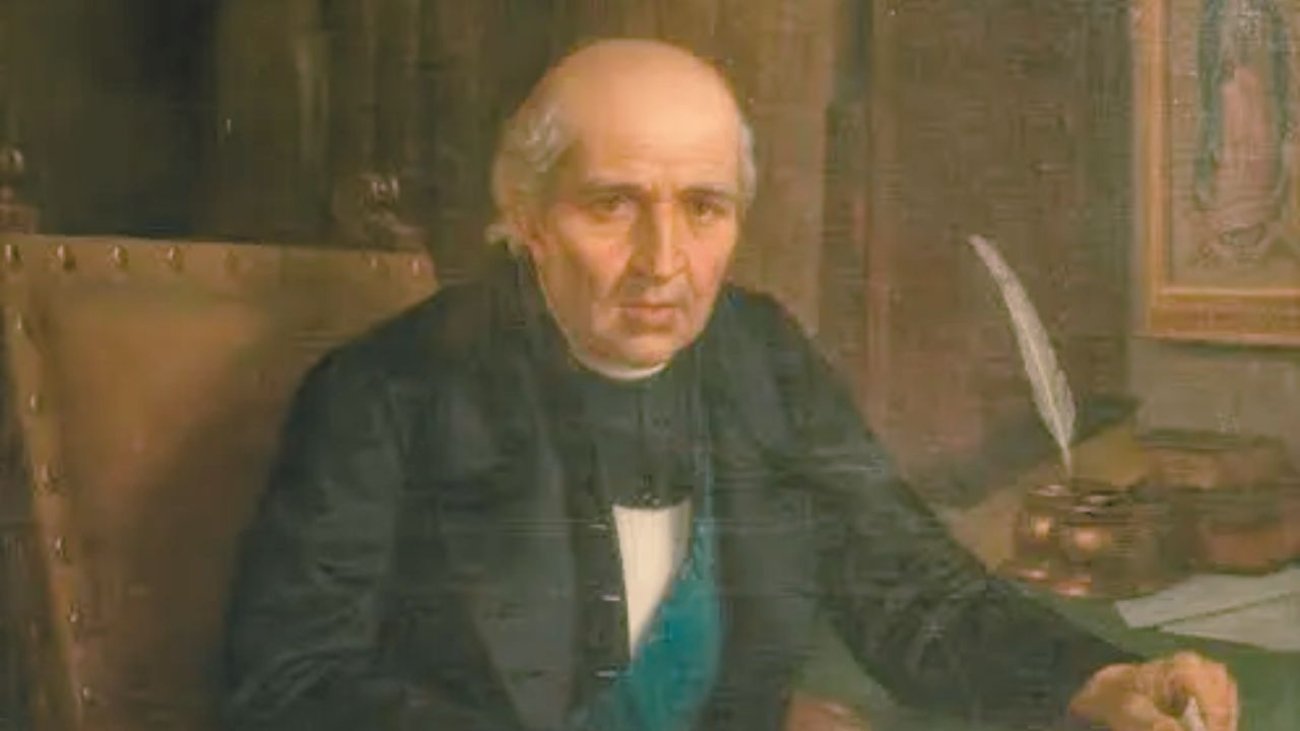
Few figures in Latin American history carry as much symbolic weight as a parish priest from a small town in Guanajuato who rang a church bell in 1810 and changed the course of a nation. His name was Miguel Hidalgo y Costilla, and more than two centuries later, Mexico still pauses every September to honor what he set in motion.
This article covers who he was, where he came from, what he did, how his life ended, and why his memory remains so present in Mexican civic life. If you have encountered his name through genealogy research, there is a note for you near the end as well.
Who Was Miguel Hidalgo y Costilla?
Miguel Hidalgo y Costilla was a Roman Catholic priest and one of the leading figures in the Mexican War of Independence from Spain. He is widely referred to as the “Father of Mexican Independence,” a title that reflects his role in launching the independence movement rather than completing it — a distinction worth keeping in mind.
He was born on May 8, 1753, at the Hacienda de San Diego de Corralejo in Pénjamo, Guanajuato. This birth date and birthplace are confirmed by the Mexican Secretariat of Public Education and other official sources.
His father, Cristóbal Hidalgo y Costilla, managed a hacienda. Miguel belonged to the Creole class — people of Spanish ancestry who were born in the Americas. This detail matters more than it might seem. Under Spanish colonial rule, Creoles held a different legal and social status than people born in Spain itself, despite sharing the same ancestry. That gap shaped many Creoles’ political frustrations, including Hidalgo’s.
His Education and Life as a Priest
Before he became a revolutionary figure, Hidalgo built a serious intellectual career. He studied theology and philosophy at the Colegio de San Nicolás in Valladolid, a city now known as Morelia. He performed well enough that he later returned to the same institution as a teacher and eventually became its rector.
He was ordained as a priest in 1778. In 1803, he was appointed parish priest of Dolores, a town in Guanajuato. There, he became known for more than religious duties. Accounts describe him as actively encouraging local economic life — promoting farming, crafts, and practical learning among the people he served.
This background is important context. Hidalgo was not simply a figurehead who stumbled into a revolution. He was an educated man with experience teaching, leading an institution, and working directly with ordinary people. That combination gave him both intellectual credibility and genuine community connections when the political situation reached a breaking point.
The Grito de Dolores and the Start of the Uprising
On September 16, 1810, Hidalgo called the people of Dolores to action against Spanish colonial rule. This event became known as the Grito de Dolores — the “Cry of Dolores.” It is treated as the symbolic beginning of Mexico’s independence movement and is why September 16 is now Mexico’s Independence Day.
One thing worth clarifying: September 16, 1810 was not the day Mexico became independent. It was the day the uprising began. Mexico would not formally achieve independence until 1821, more than a decade later. The date marks the start of the struggle, not its conclusion.
As for the speech itself — the exact words Hidalgo used that morning have never been fully preserved. Later commemorations shaped how the Grito is remembered and repeated today. No version should be treated as a word-for-word transcript of what was actually said.
What followed the Grito drew in large numbers of Indigenous and mestizo followers, along with others who opposed colonial rule. The movement grew quickly. Early military engagements produced real victories, and the insurgent forces were formidable in size. However, the army was poorly organized, and that weakness showed over time. After initial momentum, the forces suffered significant defeats against the more disciplined royalist military.
Capture, Execution, and the End of His Role in the War
Royalist forces ultimately defeated Hidalgo’s army. He was captured in 1811. What followed reflected the full weight of what he had done in the eyes of the colonial establishment: he was condemned by both civil authorities and church authorities.
That dual condemnation is telling. Hidalgo had been part of that very establishment — an ordained Catholic priest, a rector, a community leader working within the colonial system. His decision to lead a revolution placed him in direct conflict with the institutions he had once served, and those institutions responded accordingly.
He was executed in 1811. Reputable sources vary slightly on the exact date. Encyclopaedia Britannica cites July 30, while other authoritative accounts give July 31. Rather than assert one date with complete certainty, it is more accurate to say the execution occurred in late July 1811.
Hidalgo did not live to see Mexico become independent. He launched the movement, but the final campaign was carried forward by other leaders — most notably José María Morelos and, later, Agustín de Iturbide. Independence was declared in 1821, ten years after Hidalgo’s death.
How Mexico Commemorates Him Today?
Hidalgo’s presence in Mexican public life is hard to overstate. September 16 is celebrated as Independence Day each year, with the Mexican president traditionally ringing a bell and delivering a version of the Grito from the balcony of the National Palace in Mexico City. The ceremony traces its symbolism directly back to Hidalgo’s 1810 call to action.
The town of Dolores, where Hidalgo served as parish priest and where the uprising began, is now officially named Dolores Hidalgo in his honor. An entire Mexican state — the state of Hidalgo — also bears his name. His image appears in public monuments, school curricula, and civic celebrations across the country.
A 2025 publication from the Mexican government reaffirmed his birth date, birthplace, and official recognition as the “First Insurgent” and “Father of the Nation.” His place in Mexican national identity is not a recent development — it has been consistently maintained for generations.
A Note for Genealogy Researchers
Because Hidalgo is such a prominent historical name, it occasionally appears in family trees on genealogy platforms. If you have encountered the name “Miguel Hidalgo” in your own research, a few careful steps will help you figure out what you are actually looking at.
Start with specifics. The historical Hidalgo was born May 8, 1753, at the Hacienda de San Diego de Corralejo in Pénjamo, Guanajuato. His father was Cristóbal Hidalgo y Costilla. His occupation was Catholic priest. If the person in your tree does not match these documented details, the connection to the national hero is likely a coincidence of surnames rather than an actual family link.
Surnames like Hidalgo, Costilla, and related names appear across many Mexican family lines. Sharing a surname does not establish descent. Verifiable descent requires successive records — parish registers, civil registrations, land documents, wills, or archival sources — linking each generation in sequence. An unsourced online family tree is not sufficient evidence on its own.
For readers building out Mexican family history, resources at Daily Business Base can point you toward practical research strategies and how to approach historical records carefully.
Why His Story Still Matters?
Miguel Hidalgo y Costilla was not a general, not a politician, and not a figure who lived to see the outcome of what he started. He was a well-educated priest from a colonial Creole family who became convinced that Spanish rule needed to end — and who acted on that conviction in a very public, irreversible way.
His story sits at the intersection of religion, colonial politics, social class, and revolution. He was part of the establishment before he challenged it. His followers came from communities that had the least power under the colonial system. And his movement, despite its military struggles, set something in motion that could not be stopped.
Mexico became independent in 1821. Hidalgo had been dead for ten years by then. But the date that the country officially commemorates — September 16 — is his date. That says something about how history remembers the people who begin things, even when others finish them.
Read Also: