
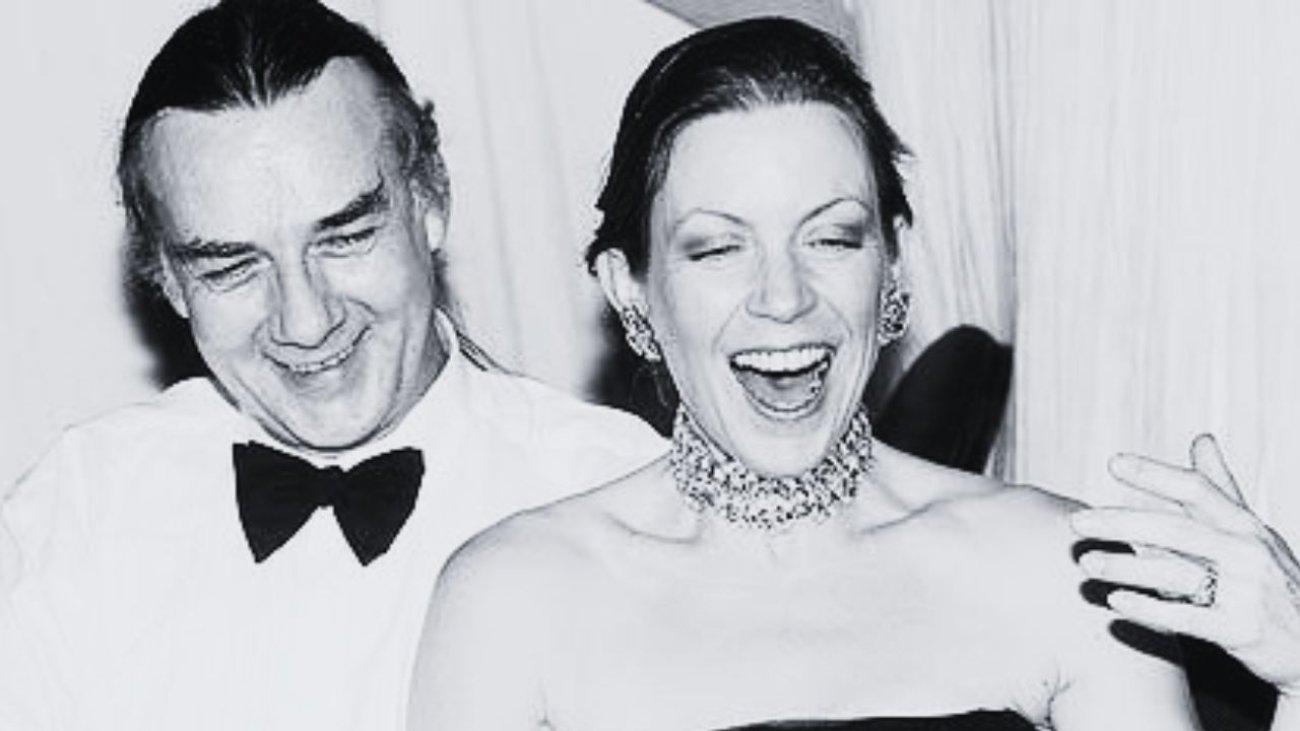
Desmond Dawe is not a household name. He did not write famous poems, appear in films, or build a public career. His name surfaces in literary genealogy searches for one reason: he was briefly married to Frieda Hughes, daughter of two of the twentieth century’s most discussed poets.
This article covers what is publicly known about Dawe, the documented facts of his marriage to Frieda Hughes, and why that connection draws search interest. It also explains, honestly, why reliable details about Dawe himself remain hard to come by.
What Is Known About Desmond Dawe?
The public record on Desmond Dawe is thin. He is primarily known in biographical sources as the first husband of Frieda Hughes. Beyond that connection, confirmed details about his background, education, career, or later life are scarce.
Two different secondary sources describe him in different terms. One refers to him as a farmworker; another calls him a biker. Neither description comes from a clearly authoritative primary source, so both should be treated as reported characterizations rather than established facts. The farmworker description appears on Alchetron, a user-compiled encyclopedia. The biker reference comes from the blog of author Marlene Wagman-Geller. These are worth noting, but they are not the same as a verified biography or primary record.
What can be said with reasonable confidence is that Dawe was a private individual who, for a brief period in the late 1970s and early 1980s, was married to a woman who would go on to build a notable artistic career. That is essentially the extent of what the available public record supports.
His Marriage to Frieda Hughes
Desmond Dawe married Frieda Hughes in 1979. At the time, Hughes was approximately 19 years old. The marriage lasted roughly three years, ending in divorce in 1982.
These dates appear consistently across multiple secondary biographical sources, including IMDb, Kiddle, and Kemi Filani’s biography page. While none of these constitute primary records such as a marriage certificate or official genealogical archive, the consistency across independent sources makes the 1979–1982 timeframe the most widely reported account available.
The marriage is described across all available sources as brief. No credible public source characterizes it in dramatic or scandalous terms. There is also no credible evidence in the public record that Dawe and Hughes had children together.
After the divorce, Dawe largely disappears from the public record. No reliable source documents his life after 1982 in any meaningful detail, and it would not be appropriate to speculate about where he went, what he did, or what became of him.
Who Frieda Hughes Is?
To understand why Desmond Dawe’s name appears in celebrity and literary searches at all, it helps to understand who Frieda Hughes is — and she is worth knowing on her own terms, not only through her parents.
Frieda Rebecca Hughes was born in London in 1960. She is a poet, painter, children’s author, illustrator, and essayist. Her career spans several decades and she has been associated with both British and Australian cultural life. She has published poetry collections, written and illustrated books for children, and contributed essays and journalism to various outlets.
She is a person with a full creative life and a significant body of work. Reducing her to a footnote in her parents’ story does her a disservice.
Her marriage to Dawe was one episode in a longer personal history. After the divorce in 1982, years passed before she married again. Her second marriage, to Laszlo Lukacs, is reported to have lasted from 1996 to 2010. That relationship also ended. These details are reported across several secondary biographical sources, though again, they are not drawn from primary documents.
The key point is that Frieda Hughes is a subject in her own right. Her connection to Dawe was a brief, early chapter. It was not the defining one.
Frieda Hughes’s Parents and Why This Family Attracts Ongoing Interest
Frieda Hughes is the daughter of American poet Sylvia Plath and British poet Ted Hughes. That parentage is at the heart of why even a relatively private former spouse like Desmond Dawe can appear in search results.
Sylvia Plath is one of the most studied poets of the twentieth century. Her novel The Bell Jar and her poetry collection Ariel remain widely read and discussed. Her death by suicide in February 1963 — when Frieda was just two years old — has been the subject of biographies, academic criticism, documentaries, and ongoing public debate for over six decades.
Ted Hughes, Frieda’s father, was no less prominent. He served as British Poet Laureate and published a substantial body of work over his lifetime. His marriage to Plath, the breakdown of their relationship, and the circumstances of her death have been analyzed and re-analyzed across countless books and articles. His poetry collection Birthday Letters, published in 1998, was his public reckoning with that chapter of his life.
Together, Plath and Hughes represent one of the most documented literary partnerships — and one of the most painful — of the modern era. That story has never really left public consciousness. It draws biographers, scholars, readers, and people who simply stumbled across a poem and wanted to know more.
When people research this family, they often follow threads into the lives of those connected to it. That includes Frieda Hughes. And because biographical databases and genealogy platforms routinely list spouses and family members, those searches can surface names like Desmond Dawe even when the person in question never sought public attention.
It is important to be clear on one point: Dawe is not related to Sylvia Plath or Ted Hughes by blood. His only connection to the Plath-Hughes family was through his marriage to their daughter. When the marriage ended, so did that connection. He was not a stepson, a nephew, or a collaborator. He was a young man who was briefly married to Frieda Hughes in the late 1970s.
Genealogy platforms like MyHeritage index marriage records, census data, obituaries, and family trees, which is precisely why a name like Dawe can appear in a search even without a media profile. The database is not confirming celebrity status. It is cataloguing a family connection that once existed.
A Note on Source Quality
Anyone researching Desmond Dawe will quickly notice that the same details — the 1979 marriage, the 1982 divorce, the descriptions of his occupation — appear across multiple websites. That repetition can create the impression of solid documentation.
It is worth pausing on that. Many of the sources repeating these details are secondary biography pages, user-compiled encyclopedias, or informal blog posts. They may all be drawing from the same original account rather than from independent research. A fact appearing on ten websites does not automatically mean it has been verified ten times.
For topics like this one, that distinction matters. For celebrity-adjacent figures who left no significant public record of their own, the gap between “widely repeated” and “verified” can be significant.
If you are researching the Plath-Hughes family for academic or journalistic purposes, primary sources — official biographies, archival records, and established literary criticism — will serve you better than aggregated biography pages. For general readers, sources like those found through Daily Business Base can help frame what is reliably known and what remains uncertain.
What This All Adds Up To?
Desmond Dawe was, by all available evidence, a private person who married Frieda Hughes in 1979 and divorced her in 1982. That is the core of what is publicly known.
He is not a celebrity. He did not pursue fame. His name appears in searches because of who he married, not because of anything he did or said in public life. Attempts to build a fuller biography of him from the available record would require filling gaps with guesswork, which this article has tried to avoid.
What the search interest around his name really reflects is the enduring pull of the Plath-Hughes story. When a family carries that much literary and cultural weight, even the edges of their family tree attract curiosity. Desmond Dawe sits at one of those edges — briefly, by marriage, in the early 1980s — and that is probably the most accurate summary possible.
Frieda Hughes, for her part, went on to build a full and independent life as a poet and artist. Her story is worth following on its own terms, separate from her parents’ shadow and separate from any of her early personal history.
Read Also: