
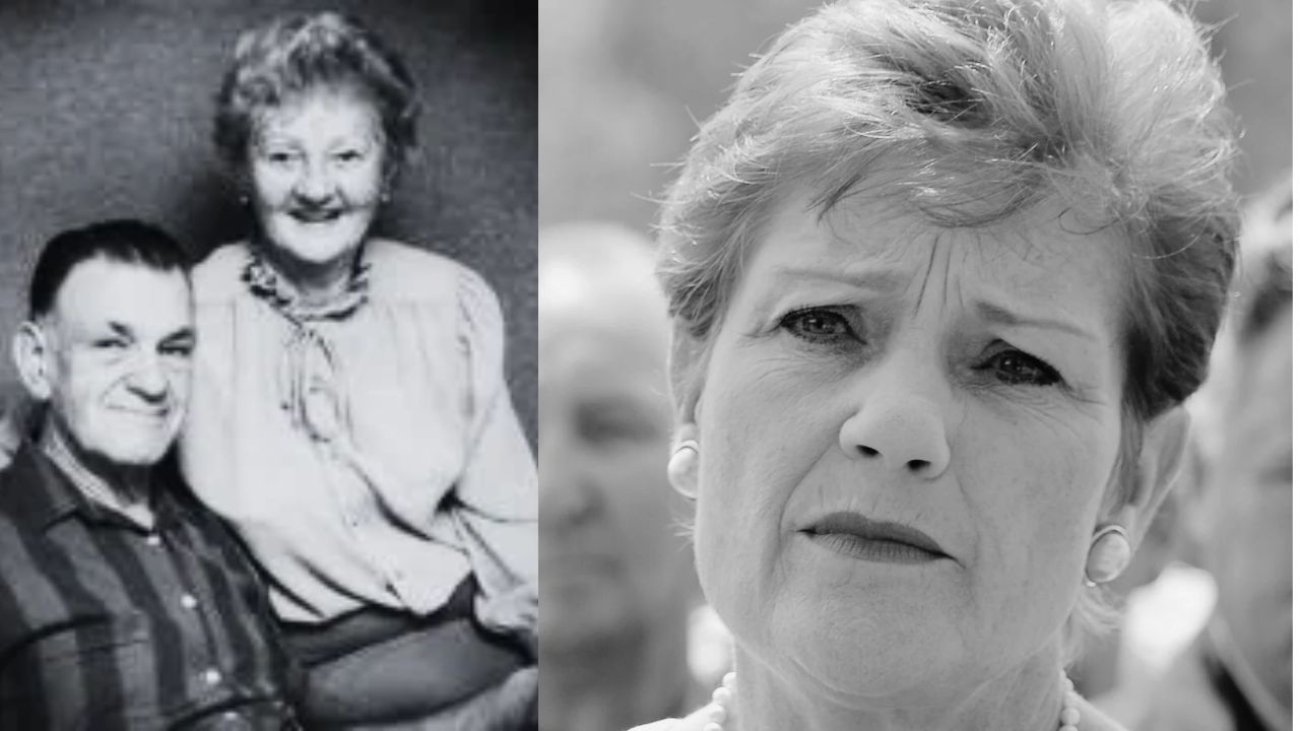
Most Australians recognize the name Pauline Hanson. Far fewer know the woman who raised her. Hannorah Webster Seccombe was a private person who lived largely outside the public eye. Yet her name has drawn curiosity over the years — through genealogy records, old media profiles, and a moment in 2016 that briefly put her back into the spotlight.
This article covers what is publicly known about Hannorah: who she was, what her name records show, her marriage and family, the Brisbane food business the family ran, and her reported influence on one of Australia’s most recognizable political figures.
Who Was Hannorah Webster Seccombe?
Hannorah Webster Seccombe was not a public figure in her own right. She did not hold public office, run a known organization, or seek media attention. The reason people search for her name today is straightforward — she was the mother of Pauline Hanson, the Australian politician and founder of the One Nation party.
Her name appears in a few different forms across genealogy databases and news reports. You may see her listed as Hannorah Webster Seccombe, Hannorah Alousius Mary Webster, or simply Norah Seccombe. These variations most likely refer to the same person. Name differences in genealogy records often come down to transcription, source differences, or how records were entered by different people over time.
If you are trying to confirm her identity in a family history search, the most reliable approach is to cross-reference the spouse’s name, the location, and the number of children — not to rely on any single record alone.
Her Name, Dates, and What Records Show
A FamilySearch profile linked to her husband gives her full name as Hannorah Alousius Mary Webster. The same profile lists her lifespan as approximately 1920 to 1998. That is the clearest date information available from genealogy sources.
However, news reporting introduces a complication. Some coverage refers to a funeral held in January 1997, which would place her death a year earlier than the FamilySearch record suggests. This discrepancy has not been publicly resolved. Rather than pick one date and state it as certain, it is more honest to note that both figures exist and that confirming the exact year would require official civil registration records.
It is also worth remembering how genealogy databases work. Sites like FamilySearch and MyHeritage combine archival documents with information submitted by individual users. That makes them genuinely useful as a starting point for research — but not as a replacement for official records. Any detail drawn from these sources should be treated as a lead, not a final answer.
Marriage to Jack Seccombe and Their Family Background
According to the FamilySearch profile for Jack Alfred Seccombe, Hannorah married him on 27 November 1943 in Sydney, New South Wales. That marriage record is the most specific biographical detail available about her early life.
News reporting from the 1990s described Hannorah’s family as being of Irish origin — sometimes referred to as “Irish stock.” Jack Seccombe, by contrast, was described as an English migrant. This background detail comes from media profiles rather than a fully traced genealogical record, so it should be understood as reported ancestry rather than a proven family history.
Together, Hannorah and Jack had seven children. Pauline Hanson was one of them. The family settled in the Brisbane area, where they built a life centered largely around running their own business.
The Family Food Business and How the Children Were Raised
The Seccombe family operated a food business in Brisbane. Depending on the source, it has been described as a milk bar, a café, or a takeaway shop. The exact type of establishment is not entirely consistent across reports, so it is safer to describe it broadly as a family food business rather than pin down a specific format.
What is consistent across accounts is how the family ran it. All seven children were involved from a young age. They helped prepare food, served customers, and kept the business moving. Long working hours were simply part of daily life in the Seccombe household.
Hannorah was described in media accounts as a disciplined and forceful presence — someone who kept a large family and a working business running at the same time. These details come primarily from news.com.au reporting and a 1996 piece published on australianpolitics.com, both of which drew on interviews and profiles of Pauline Hanson’s background.
This kind of upbringing later became part of Pauline Hanson’s public story. She has spoken about growing up in a hard-working household and carrying those values into her adult life. The fish-and-chip shop she ran before entering politics fits neatly into that narrative — and the roots of it trace back to what the family built in Brisbane.
Hannorah’s Reported Influence on Pauline Hanson
Pauline Hanson has spoken publicly about her mother on more than one occasion. Media profiles consistently describe Hannorah as a significant presence in the household — someone whose approach to work, discipline, and family shaped how her children saw the world.
It would be an overreach to say Hannorah directly created Pauline Hanson’s political views. What can be said, based on Hanson’s own public statements and media reporting, is that her mother was a formative figure. The values Hanson frequently describes — hard work, self-reliance, running a business, managing under pressure — are consistent with what accounts say about the Seccombe household.
As always, it is worth separating what Pauline Hanson has said publicly from what can be independently confirmed. The influence described here is based on her own comments and journalists’ profiles, not on documented personal correspondence or other primary sources.
The 2016 Video and Media Attention
Hannorah Seccombe attracted renewed media attention in 2016 when a video surfaced showing her expressing strongly negative views about Asian immigration. The footage dated from an earlier period but circulated widely during a time when Pauline Hanson’s return to federal politics was drawing significant coverage.
News outlets — including news.com.au — reported on the video and its content. Rather than repeat the specific language used, the key point is that the footage was striking enough to become news in its own right. Commentators noted it in the context of Pauline Hanson’s own history of remarks about immigration and multiculturalism.
For readers encountering Hannorah’s name through that coverage, it is worth understanding she was a private individual — not a politician, not a public activist. The video brought her into the public conversation because of her connection to her daughter, not because she sought any kind of platform herself.
Navigating Genealogy Records About Hannorah
If you are researching Hannorah Webster Seccombe for family history purposes, a few practical points are worth keeping in mind.
- Her name appears in multiple forms. Hannorah Alousius Mary Webster is the longest version recorded on FamilySearch. Media reports use Norah Seccombe more often.
- The birth year of approximately 1920 and the suggested death year of 1998 come from FamilySearch, but news references to a 1997 funeral suggest those dates may need verification.
- Family trees on platforms like MyHeritage and FamilySearch are built from a mix of archival records and user-submitted content. They are helpful starting points, not guaranteed facts.
- Confirming identity works best when you match multiple details — spouse name, marriage location, number of children — rather than relying on a name alone.
For those doing deeper research, official New South Wales or Queensland civil records would be the most reliable source for birth, marriage, and death information. Genealogy websites can point you in the right direction, but original documents carry the most weight.
If you are exploring topics like this through a broader lens of Australian public life and business history, Daily Business Base covers stories that connect personal backgrounds with public figures and business culture.
A Private Woman Behind a Public Name
Hannorah Webster Seccombe spent her life outside the public eye. She raised seven children, helped run a family business, and by most accounts ran a demanding household with considerable energy and structure. None of that would have made her a person of public interest on its own.
What brings her name into view today is her daughter. Pauline Hanson remains one of the most debated figures in Australian political life, and understanding where she came from is a natural part of understanding who she became. Hannorah — as mother, as the central figure of a working-class Brisbane household, and as someone who briefly appeared on video in 2016 — is part of that story.
What is known about her is limited but grounded in real sources. What is not known should stay that way — acknowledged as uncertain rather than filled in with guesswork. That is probably the most respectful way to treat someone who never asked to be written about at all.
Read Also: