
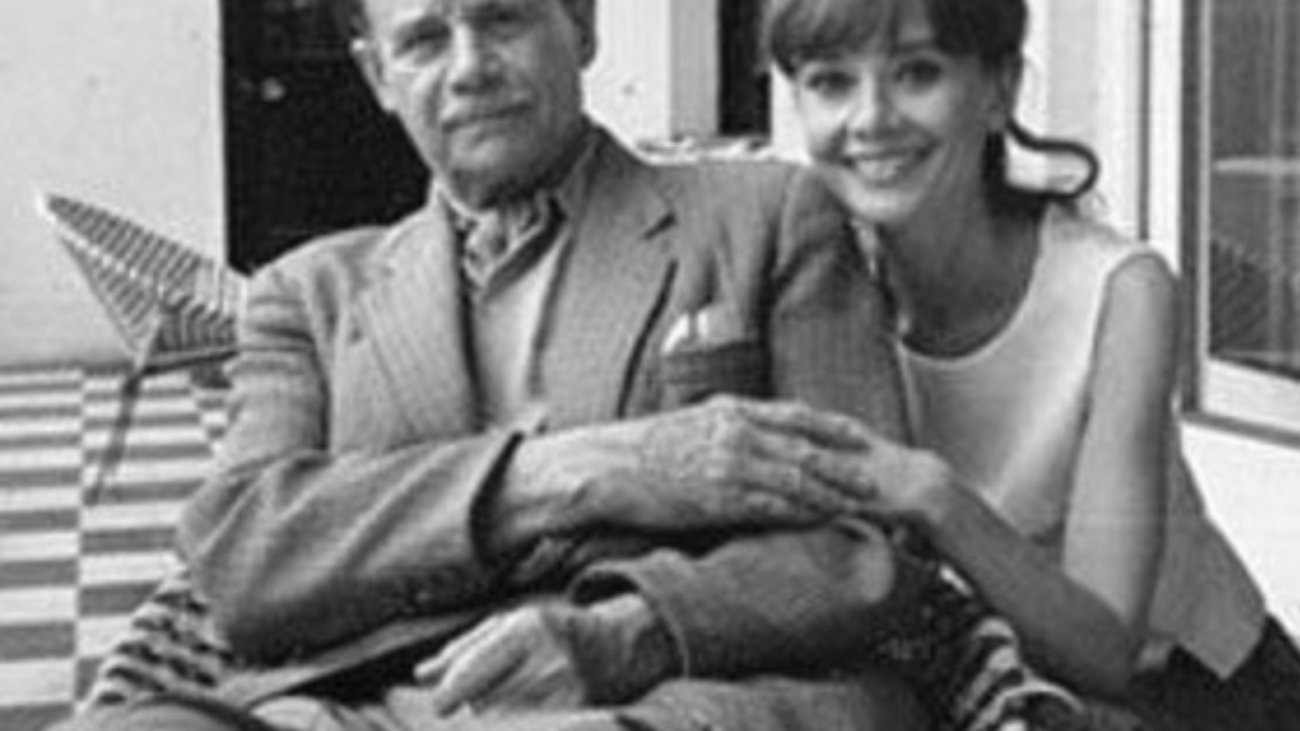
Most people who search for Joseph Victor Anthony Ruston are really looking for one thing — his connection to Audrey Hepburn. His name turns up in genealogy databases, archival records, and biographical footnotes, often in slightly different forms. That inconsistency creates genuine confusion, and it’s worth taking the time to sort through what the records actually say.
This article covers who Ruston was, what is reliably known about his background and career, his marriage to Ella van Heemstra, the surname question, his wartime record, and how all of this connects to Audrey Hepburn’s early family history.
Who Joseph Victor Anthony Ruston Was?
Joseph Victor Anthony Ruston was Audrey Hepburn’s father. That is the most important fact about him, and it is also the reason people search for his name today.
He appears in records under at least three different names: Joseph Ruston, Joseph Victor Anthony Ruston, and Joseph Victor Anthony Hepburn-Ruston. These all refer to the same person. The name variations are a common source of confusion in genealogy searches, and they will be explained further below.
His daughter was born Audrey Kathleen Ruston. She later became known professionally as Audrey Hepburn — one of the most recognized actresses of the twentieth century.
The dates most commonly cited for Ruston are 21 November 1889 to 16 October 1980, supported by both The Peerage and Find a Grave. He was not a public figure in his own right. His visibility today is almost entirely genealogical, tied to his daughter’s fame.
His Birthplace — Why the Records Conflict
Where exactly Joseph Ruston was born is not settled. Different sources give different answers, and it is worth being honest about that rather than picking one and presenting it as fact.
MyHeritage lists his birthplace as Úžice in the Mělník District, in what is now the Czech Republic. The Peerage, on the other hand, gives London as his place of birth. These two sources are describing the same person but arriving at different conclusions.
This kind of disagreement is not unusual in digitized genealogy records, especially for people born in the late nineteenth century across multiple countries. Records were kept differently, transliterated differently, and sometimes filled in from memory rather than documentation.
Both MyHeritage and The Peerage are useful starting points, but neither is equivalent to a verified civil or government record. Readers looking for a definitive answer on his birthplace may not find one in publicly available sources. It is better to treat both claims as reported rather than confirmed.
His Career — Banker, Business Figure, and Reported Consular Work
Ruston’s professional life is described differently depending on which source you read, and it is worth being careful not to collapse all of those descriptions into a single tidy label.
MyHeritage describes him simply as a banker. Secondary biographical sources connect him more broadly to business, finance, and trading activity in Asia during the early twentieth century.
Some accounts describe him as an honorary British consul in Semarang, in the Dutch East Indies, during the early 1920s. Find a Grave and The Vintage News both mention this, as does biographical material reproduced through Scribd. However, this role has not been confirmed through officially available diplomatic records. It should be understood as a claim made by secondary sources, not a verified government appointment.
Banking, commerce, and an honorary consular role are three distinct things. Describing Ruston simply as a diplomat would not be accurate, and the available evidence does not fully support that description.
His Marriage to Ella van Heemstra and Audrey Hepburn’s Birth
Ruston married Ella baroness van Heemstra in Batavia, Java, in September 1926. This is supported by both MyHeritage and The Peerage.
Ella came from a Dutch aristocratic family. Her father was Baron Aarnoud van Heemstra. This background gave Audrey Hepburn a family identity that stretched across British, Dutch, and Belgian connections — something that would shape her international upbringing.
Audrey Hepburn was born in Brussels on 4 May 1929, the daughter of Joseph Ruston and Ella van Heemstra. The couple divorced in 1939, when Audrey was still a child.
After the separation, Audrey was raised primarily by her mother. This is the consistent account across multiple biographical sources. The divorce clearly had an impact on Audrey’s childhood, though the full nature of her relationship with her father during those years is described differently across various accounts, and the article should not reduce it to a single simple narrative.
The Surname Question — Ruston, Hepburn-Ruston, and the Scottish Connection
One of the most common points of confusion in records is the shift from Ruston to Hepburn-Ruston. Joseph Ruston was born with the surname Ruston, but he later adopted the hyphenated form Hepburn-Ruston.
Several accounts suggest he believed his family had a connection to the Scottish Hepburn lineage — a historic aristocratic name. The New York Times, in a 1994 review discussing Audrey Hepburn’s family background, noted the surname change in connection with the family’s search for an aristocratic association. However, that interpretation should not be taken as proven fact. A surname that resembles an aristocratic family name does not by itself confirm descent from that family.
What matters practically is that the name change explains why genealogy records may list Audrey Hepburn under both Ruston and Hepburn-Ruston. Her birth surname was Ruston; the hyphenated form came into use after her father adopted it. This is why readers sometimes find multiple versions of the same name when searching family history databases.
His Political History and Wartime Internment
This part of Ruston’s record is documented in an official archival source and should not be omitted from any honest account of his adult life.
The UK National Archives catalogue records that Joseph Victor Anthony Ruston was active in the British Union of Fascists from 1934 to 1936 and was associated with foreign fascists. It also records that he was interned under Defence Regulation 18B from June 1940 to April 1945.
Defence Regulation 18B was a wartime measure used by the British government to detain individuals considered a potential security risk. It was applied to a number of people with known fascist sympathies or associations.
This is a significant part of his historical record. The National Archives entry is an archival catalogue description, not a criminal conviction, and it should be read as such. It documents his associations and his detention during the war, but it is not the place to draw broad conclusions about his personal beliefs beyond what the record states.
Audrey Hepburn spoke in later interviews about the effect her father’s abandonment had on her. She carried the emotional weight of that early separation throughout her life. The political dimension of his history adds another layer of context to a family story that was already complicated.
How This Fits Into Audrey Hepburn’s Story?
Audrey Hepburn went on to become one of the most celebrated actresses in cinema history. She won an Academy Award for Roman Holiday in 1953 and gave iconic performances in Sabrina, Breakfast at Tiffany’s, and My Fair Lady. Later in life, she devoted much of her time to humanitarian work as a UNICEF Goodwill Ambassador.
Her family background — a British-connected father, a Dutch aristocratic mother, childhood years in Belgium and the Netherlands — contributed to an unusually international identity. That identity shaped who she became, even when the family circumstances were difficult.
For readers interested in the broader context of celebrity family history, Daily Business Base covers profiles and background stories connected to well-known public figures.
Joseph Ruston himself was not a celebrity. He did not achieve any independent public profile. His name is searched today almost entirely because of Audrey. His story is primarily one of family history — a complicated, layered background that sits behind one of cinema’s most enduring figures.
A Final Note on the Sources
Much of what is publicly available about Joseph Victor Anthony Ruston comes from genealogy databases and secondary biographical accounts. These are helpful starting points, but they are not all equally reliable.
The UK National Archives entry is the strongest documentary source for his political associations and wartime internment. MyHeritage and The Peerage provide useful family history details but should be treated as leads rather than final answers. Find a Grave, The Vintage News, and Scribd material offer supplementary information that requires corroboration.
Where records conflict — as they do on his birthplace — the honest approach is to note the disagreement and not force a resolution that the evidence does not support.
What the record does support clearly is this: Joseph Victor Anthony Ruston was Audrey Hepburn’s father, married to Ella van Heemstra, active in the British Union of Fascists in the mid-1930s, interned during World War Two, and largely absent from Audrey’s life after his divorce from her mother. Beyond that, the picture remains incomplete — which is itself a meaningful piece of context for anyone researching this name.
Read Also: